By Abass Mahmoud Sillah Jr
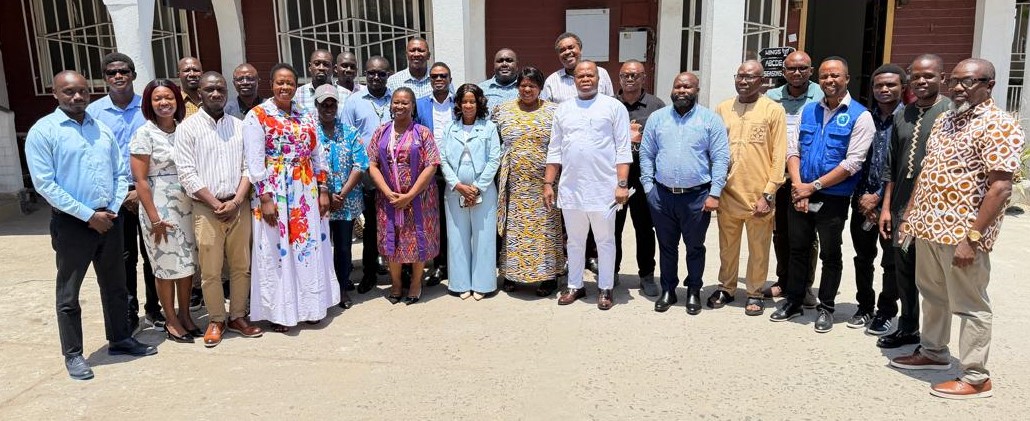
Sierra Leone is taking significant steps toward improving its management of hazardous chemicals and waste, as experts unveil a comprehensive National Action Plan (NAP) aimed at safeguarding public health and the environment. Presenting the framework, Consultant Hamidu David Mansaray outlined the objectives, methodology, and long-term vision guiding the development of the plan, which seeks to address longstanding weaknesses in the country’s chemicals management systems. According to Mansaray, the presentation provides an in-depth review of the background and structure of the NAP, including the country’s vision for sustainable chemicals management and its alignment with national development priorities.
“We want to clearly define where Sierra Leone stands today and where we aspire to be in the future, particularly in ensuring safe and effective management of chemicals throughout their life cycle—from production to disposal,” he said. Mansaray acknowledged that Sierra Leone currently faces serious challenges in managing both chemical and general waste, citing inadequate infrastructure and weak regulatory enforcement. “You will agree that our current waste management systems are not robust enough. If general waste is already a challenge, then chemicals—which pose even greater risks—require urgent and specialized attention,” he noted.
He warned that poor handling of chemical waste, including practices such as open burning at dump sites, poses significant threats to human health and the environment through the release of toxic emissions. The consultant emphasized that Sierra Leone is a signatory to several international environmental agreements on chemicals and waste management, making it imperative for the country to domesticate and implement these obligations effectively. “As a country, we are bound by international conventions. The task now is to translate these commitments into practical national policies and actions,” Mansaray said.
The plan also aligns with global development frameworks, including the Sustainable Development Goals (SDGs), particularly those related to health, environmental protection, and sustainable development. A key component of the NAP is the identification of systemic gaps, including weak institutional coordination and fragmented mandates, limited technical and human capacity, inadequate funding and logistics, and poor data availability on chemical use and waste generation. Mansaray noted that many institutions lack the necessary training, resources, and clear mandates to effectively manage chemicals, leading to inefficiencies and overlaps. “Some institutions have responsibilities on paper but are not fully operational in practice.
This fragmentation undermines effective implementation,” he explained. The consultant highlighted the lack of reliable national data as a major obstacle, revealing that much of the existing information is sourced from other countries with similar contexts. “We rely heavily on external data, which may not fully reflect our local realities. There is an urgent need for country-specific research and data collection systems,” he said. He called for sustained investment in data generation and management to support evidence-based decision-making. The National Action Plan is structured around five strategic pillars designed to guide reforms and interventions across sectors.
It also includes a clear implementation timeline, institutional responsibilities, and a monitoring and evaluation framework. “This is not just a policy document—it is a roadmap for action,” Mansaray stressed. “Without timelines and accountability, even the best plans will not achieve results.” The monitoring and evaluation component, he added, will help track progress, assess efficiency, and ensure that the plan delivers measurable outcomes. The overarching vision of the NAP is to establish a system where chemicals are managed safely and sustainably, minimizing risks to human health and the environment. By the end of its implementation, the government aims to achieve a fully functional life-cycle management system for chemicals, supported by strong institutions, reliable data, and effective policies. “We envision a future where chemicals management is no longer a threat but a well-regulated system that supports sustainable development,” Mansaray concluded.