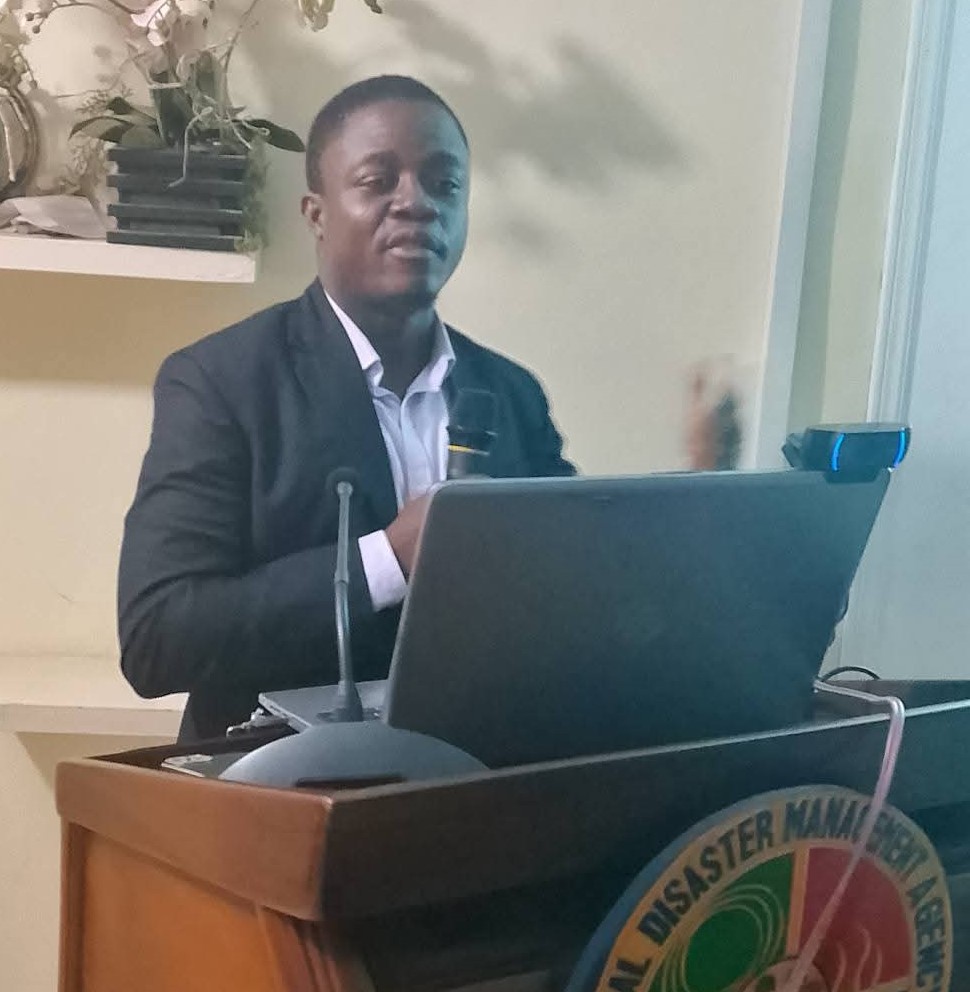
Freetown, Sierra Leone The Deputy Minister of Health, Professor Charles Senesie, has reaffirmed the Ministry of Health’s central leadership role in the management of healthcare waste, water, sanitation and hygiene (WASH), and food safety, describing these areas as critical pillars of public health protection, climate resilience, and pandemic preparedness.
Professor Senesie made the statement during a high-level engagement with Shout Climate Change Africa, held as part of ongoing national discussions on environmental sanitation, climate-responsive health systems, and public health risk management. Addressing participants, the Deputy Minister outlined three priority areas currently under national review: healthcare waste management, WASH standards in health facilities, and food safety regulation.
Professor Senesie stressed that waste generated in hospitals and other health facilities—particularly infectious and toxic materials—must remain under the direct oversight of the Ministry of Health. “Waste from patients and other hazardous materials immediately fall within the red zone and require specialized handling,” he said, warning that improper disposal poses serious risks during disease outbreaks and environmental emergencies.
He cited systems developed during the COVID-19 response, including emergency planning, reporting, and response mechanisms, as proof that the health sector possesses the technical capacity to manage such risks effectively. Highlighting the importance of Water, Sanitation and Hygiene (WASH) in hospitals and clinics, Professor Senesie emphasized that sanitation standards within health facilities must be maintained at the highest level, particularly in the face of pandemics and climate-related health threats.
“We have mastered pandemic response in this country,” he noted, recalling how trained paramedics and frontline health workers successfully managed emergencies through coordinated surveillance and response systems. He underscored that sanitation in health facilities should remain under health sector control to ensure swift and effective interventions during disease outbreaks. On food safety, the Deputy Minister made a strong case for continued regulation by the Ministry of Health, describing food as an extension of medicine.
“Food today can be nourishment, and tomorrow it can be medicine,” he explained, drawing comparisons with global regulatory bodies such as the United States Food and Drug Administration and Japan’s Food and Drug Administration. Professor Senesie warned that during food poisoning incidents or disease outbreaks, health authorities must be able to trace and analyze food samples within 24 hours to prevent further harm. “If we delay, samples mix within the body system, making investigations difficult,” he cautioned.
While affirming the Ministry’s custodial mandate, Professor Senesie encouraged inter-agency collaboration, calling on environmental organizations, civil society groups, and other government institutions to work collectively within clearly defined roles. “We must all come together to get sanitation right for the health of our people,” he concluded. Responding on behalf of Shout Climate Change Africa, representatives thanked the Deputy Minister for the engagement and raised concerns over harmful food preservation practices, particularly involving fruits sold in local markets.
The organization announced plans to intensify public awareness campaigns on sanitation and food safety, citing findings from investigations that revealed the use of dangerous preservation methods with serious health and environmental implications. “These practices are very harmful and require urgent attention,” a representative said, calling for stronger enforcement and sustained community education. The engagement underscored the growing intersection between climate change, environmental sanitation, and public health, with stakeholders agreeing that safeguarding food systems and sanitation infrastructure is essential to strengthening national resilience.