By Abass Mahmoud Sillah Jr
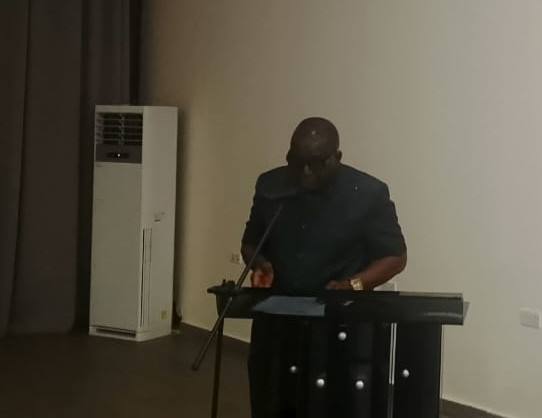
The Director General of the National Minerals Agency (NMA), Ing. Alhaji Haji Daboh, has called for decisive, coordinated national action to position Sierra Leone as a leading player in the global critical minerals market, emphasizing that the country stands at a “historic inflection point” in its development trajectory. Speaking at a high-level stakeholder engagement that brought together government officials, Members of Parliament, mining companies, civil society actors, academics, and development partners, Daboh underscored the urgency of aligning national efforts with rapidly evolving global demand for critical minerals.
“This engagement is not a formality,” he said. “It is a decisive step in a national conversation that will shape the trajectory of Sierra Leone’s development for generations to come.” Daboh noted that the global shift toward net-zero emissions by 2050, coupled with the electrification of transportation and expansion of renewable energy systems, has dramatically increased demand for minerals such as lithium, platinum group metals, rare earth elements, chromite, rutile, and bauxite.
According to projections cited in his address, demand for critical minerals could rise by as much as 500 percent by mid-century, with lithium demand expected to surge significantly as electric vehicle production accelerates worldwide. “Sierra Leone will not hesitate,” Daboh declared. “This is our declaration of intent.” Highlighting tangible progress, the NMA Director General pointed to ongoing developments in the country’s mining sector, including the construction of Sierra Leone’s first lithium mine in the Bombali District.
The project, led by a subsidiary of one of China’s largest lithium companies, is targeting a production capacity of approximately two million tonnes per year. Daboh described the development as a clear signal of investor confidence in Sierra Leone’s mineral potential. “The presence of globally recognized companies, with supply relationships to firms such as Tesla, BMW, and LG Chem, demonstrates that Sierra Leone’s geology is competitive and our investment environment is gaining credibility,” he said.
Beyond extraction, Daboh emphasized that mining must drive broader socio-economic development, particularly in underserved regions. He noted that mining investments are expected to catalyze improvements in road networks, electricity supply, water access, and digital connectivity. “Mining infrastructure must serve communities, not just operations,” he stressed, adding that the sector has the potential to contribute significantly to the government’s development priorities.
Central to the strategy, Daboh said, is the need for strong institutions and transparent governance. He reaffirmed the NMA’s commitment to enhancing regulatory oversight, enforcing compliance, and maintaining investor confidence through credible and consistent administration. “Investor confidence is not won by rhetoric alone,” he noted. “It is earned through transparent, technically sound, and predictable governance.”
He also highlighted ongoing collaboration between the NMA, the Ministry of Mines and Mineral Resources, and the Environmental Protection Agency to ensure a harmonized regulatory framework aligned with international best practices. The Mines and Minerals Development Act of 2023, he added, provides a solid legislative foundation for implementing the country’s critical minerals strategy. Daboh further stressed the importance of building a comprehensive national geoscience database to attract high-quality investment.
He revealed that the NMA is accelerating geological mapping efforts, particularly in mineral-rich regions, to provide reliable data for investors. “A credible and accessible geological database is essential if we are to attract the caliber of investment this strategy envisions,” he said. In a pointed remark, Daboh warned that governance failures in the mining sector could undermine Sierra Leone’s competitiveness in the global market. “Every lapse in transparency, every unresolved compliance issue, and every unmet community obligation is not just a moral concern—it is a commercial liability,” he cautioned.
He added that countries demonstrating strong governance and responsible sourcing standards are increasingly being favored by global buyers seeking secure and ethical supply chains. Daboh emphasized that the success of the critical mineral’s strategy should not be measured solely by export revenues, but by its impact on citizens’ lives. “The true measure of success lies in the young graduate employed in a processing facility, the community gaining access to clean water and electricity, and the entrepreneur building a business within the mining value chain,” he said.
The NMA Director General also paid tribute to the leadership of the Minister of Mines and Mineral Resources, praising his role in advancing reforms and promoting Sierra Leone as an attractive investment destination on the global stage. He cited the Minister’s participation in major international mining forums in Toronto and Cape Town, as well as bilateral engagements with technology-driven economies, as instrumental in attracting investor interest. “Your leadership will be remembered as a defining chapter in Sierra Leone’s mineral development journey,” Daboh stated.
Quoting the United Nations Secretary-General, Daboh concluded by emphasizing that critical minerals present a transformative opportunity—but only if managed responsibly. “The resources are here. The global demand is here. The strategy is before us,” he said. “What is required now is a collective will to act decisively, responsibly, and together.”