By Abass Mahmoud Sillah Jr
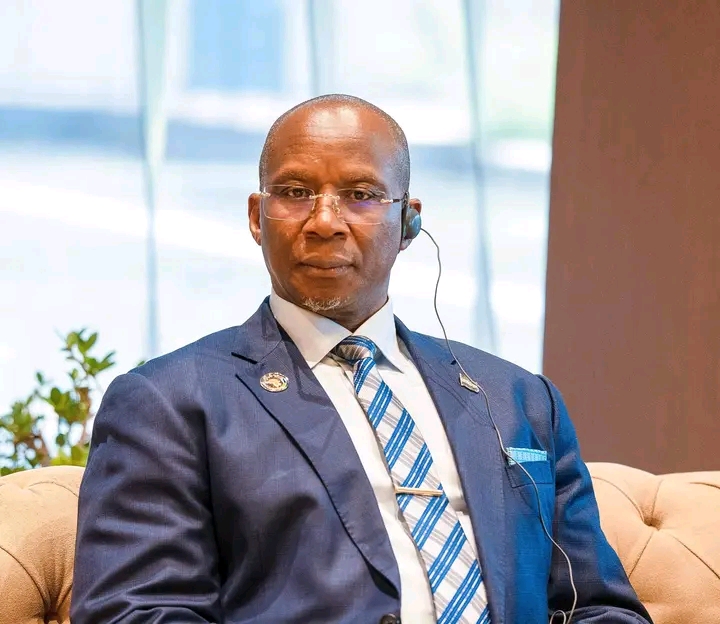
The Minister of Mines and Mineral Resources, Julius Daniel Mattai, has called for a bold and coordinated national approach to harness Sierra Leone’s vast mineral wealth, emphasizing the need for strong governance, regional cooperation, and industrial development to secure long-term economic transformation. Delivering a keynote address at a high-level stakeholders’ session on critical minerals and the energy transition, the Minister underscored that Sierra Leone must move beyond being a mere supplier of raw materials and instead position itself as a strategic player in global value chains.
“Sierra Leone is not just a passive participant in the global energy transition,” he stated. “We are a strategic and meaningful actor, capable of shaping outcomes through intelligence, patience, and deliberate policy choices.” Minister Mattai stressed that the future of the mining sector will depend not only on geology but on governance, finance, and control over value chains. “The real battle is not in geology alone,” he noted. “It lies in geopolitics—who provides the finance, who owns the contracts, who sets the rules, and who ultimately captures the value.”
He warned that without strong institutions and strategic negotiation, resource-rich nations risk remaining marginalized despite their natural wealth. The Minister called on governments, investors, and stakeholders to uphold principles of transparency, integrity, and accountability in the sector. He urged mining companies to adopt responsible practices that respect communities, labor rights, and environmental standards. “We must insist on investments that are not only profitable but also ethical—investments that respect people, protect communities, and create sustainable employment,” he said.
He also emphasized the importance of strengthening regulatory systems to combat illegal mining, smuggling, environmental degradation, and child labor. A significant portion of the address focused on inclusion, particularly the role of young people and local communities in shaping the future of the mineral sector. He encouraged youth to actively participate in building enterprises, technologies, and institutions that support mining and industrialization. “The future must be safer, more formalized, better regulated, and more productive for our people,” he said.
“Young men and women must see themselves not as bystanders, but as innovators and leaders in this transformation.” Minister Mattai further outlined the government’s vision to expand beyond extraction into downstream industries, including mineral processing, manufacturing, and innovation-driven enterprises. He explained that the emerging critical minerals strategy is designed to position Sierra Leone as a globally recognized leader in responsible production and processing, contributing to the world’s transition to clean energy.
“This vision is ambitious, but it is necessary,” he stated. “We must build strong industrial linkages that generate jobs, increase revenue, and drive sustainable development.” Reflecting on Sierra Leone’s history, the Minister acknowledged that despite abundant mineral resources—including diamonds and other valuable deposits—the country has not fully realized the benefits of its wealth. “If geology alone created prosperity, Sierra Leone would already be a superpower,” he remarked. “But history has shown us that natural resources without strong systems can lead to inequality, displacement, and lost opportunities.”
He emphasized the need to confront these challenges honestly and to build a new model anchored in fairness, inclusivity, and long-term planning. The Minister commended government institutions, mining companies, development partners, civil society organizations, and academic institutions for their contributions to shaping the national minerals strategy. He noted that the strategy is grounded in research, data analysis, and global best practices, ensuring alignment with international development frameworks and market realities.
Concluding his address, Minister Mattai described the present moment as a critical turning point for Sierra Leone. “This is a moment of reckoning and a moment of courage,” he said. “We must act decisively to transform our mineral wealth into a foundation for shared prosperity.” He reiterated that with the right policies, partnerships, and commitment, Sierra Leone can transition from a resource-dependent economy to a resilient and industrialized nation capable of competing on the global stage.