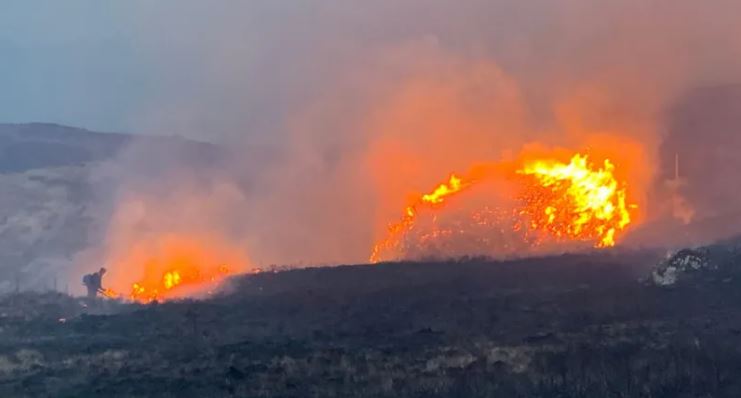
A series of wildfire warnings have been issued for Scotland. The Scottish Fire and Rescue Service (SFRS) and Scottish Wildfire Forum (SWF) said there was a “very high” risk of incidents in western parts of the country on Thursday. They said the level would increase to “extreme” from Friday to Sunday. A very high-risk warning will also cover central and eastern Scotland from Friday to Sunday.
Wildfires are usually sparked by human activity such from the setting of camp fires or dropped cigarettes, and the first warnings of the season were issued in late March for north and north-east Scotland. The latest warnings have come during a spell of dry and windy weather, and when there is still older, dead vegetation on hillsides, woodlands and other outdoor spaces.
SFRS head of prevention, Deputy Assistant Chief Officer Kenny Barbour, said wildfires had the potential to destroy property, landscapes and wildlife. Scottish ministers approved the new by-law and it will be in force until 30 September every year. Offenders could be fined £500. Parts of the national park were badly damaged last summer by what landowners described as the biggest wildfire in Scottish history.
What causes wildfires? SFRS classifies wildfires as large, uncontrolled outdoor fires exceeding 1,000 sq m of burned area. It says these fires are unplanned, uncontrolled and unpredictable, and occur in areas with combustible vegetation that can fuel rapid spread.
Human activity is often to blame with fires started by barbecues, glass bottles magnifying sunlight on dry vegetation and discarded cigarettes. One of the reasons fires continued to burn on moorland was because of its peaty soil which fuels the flames.