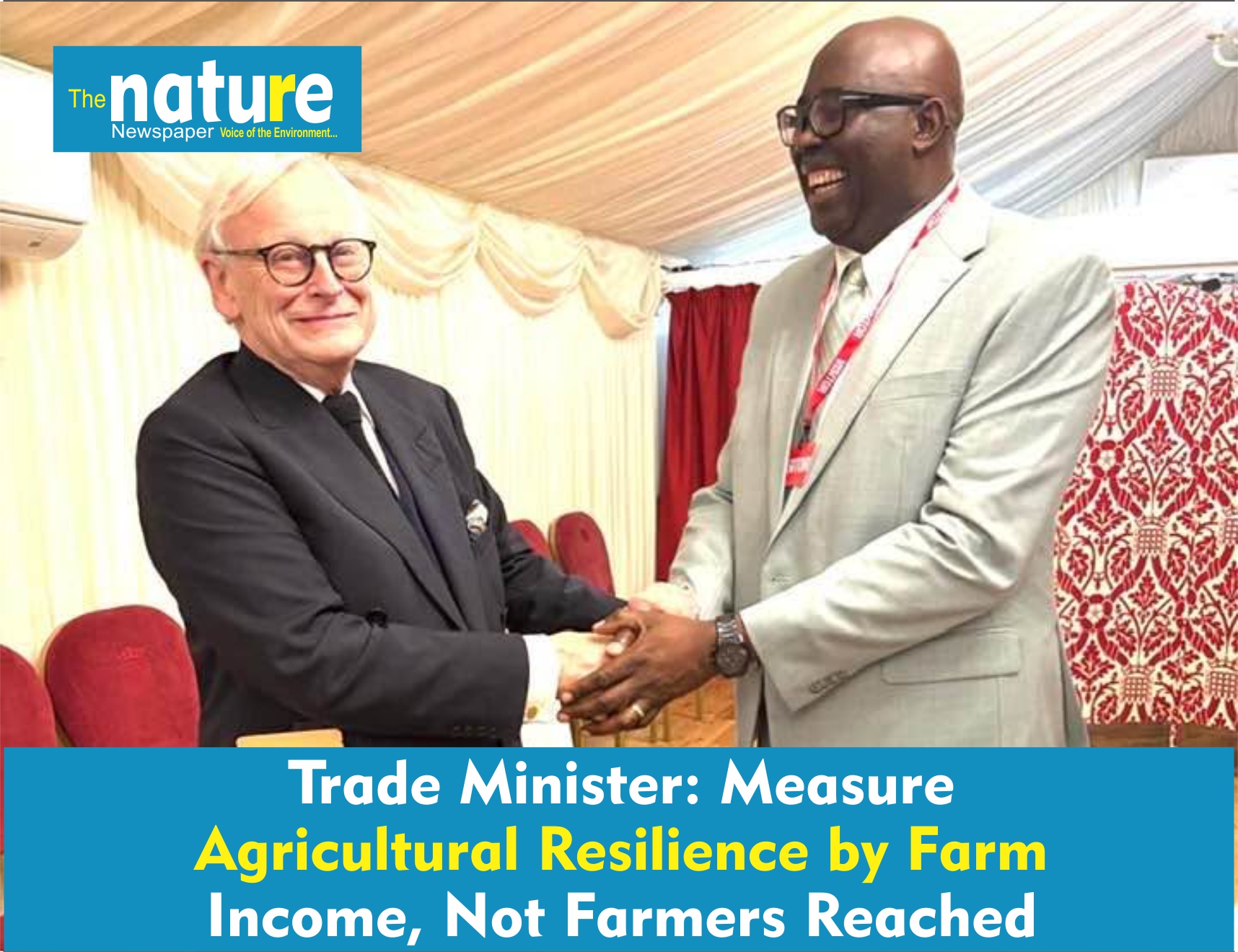
London, United Kingdom, Oct. 23, 2026 Minister of Trade and Industry, Alpha Ibrahim Sesay, has warned that global efforts to build climate-resilient coffee and cocoa industries risk falling short if farmers cannot access investment, adapt to climate pressures and earn sustainable incomes. “Resilient production must be demonstrable, financeable and connected to markets. Measure us by farm income and value retained at origin – not by farmers counted,” Sesay said at the British House of Lords in London. He delivered the keynote address at a high-level World Coffee Alliance Networking Soirée, hosted by Lord Deben following the first day of the World Coffee Innovation Summit (WCIS26). Addressing government representatives, producers, traders, investors and development partners, Sesay called for a coordinated approach to climate action, agricultural finance and supply-chain development, arguing that the three must be treated as parts of one economic system. “Climate, capital and supply chains are not three conversations.
They are one system. Climate resilience cannot be scaled without capital. Capital will not flow without credible data and predictable rules. And supply chains cannot be resilient if farmers cannot invest, adapt or earn,” he said. Sesay argued that the success of agricultural development should be judged by its economic impact on farmers and producing countries, rather than by programme reach or the amount of financing announced. “The test is not how much capital is announced, but whether it strengthens productive capacity,” he said, stressing the need to direct investment towards farms so producers can improve productivity, adapt to climate risks and increase their earnings. He also highlighted the economic importance of protecting forests, soils, biodiversity and water, saying these natural assets are central to long-term agricultural resilience rather than peripheral environmental concerns.
The Minister called for credible, interoperable traceability and data systems that connect producers to markets and support investment without imposing additional costs on farmers without corresponding benefits. He said producing countries must also capture more value from global coffee and cocoa supply chains instead of remaining primarily suppliers of raw commodities. “Our task is no longer to describe risks. It is to organize a response that is investable, scalable, fair and benefits all players equally,” Sesay said. He urged governments, investors and development partners to replace fragmented interventions and short-term transactions with integrated national systems and long-term partnerships. “Sierra Leone stands ready – not as a passive supplier, but as a committed partner in building a more resilient, inclusive and competitive global coffee and cocoa economy,” he said.