By: Mohamed J Bah
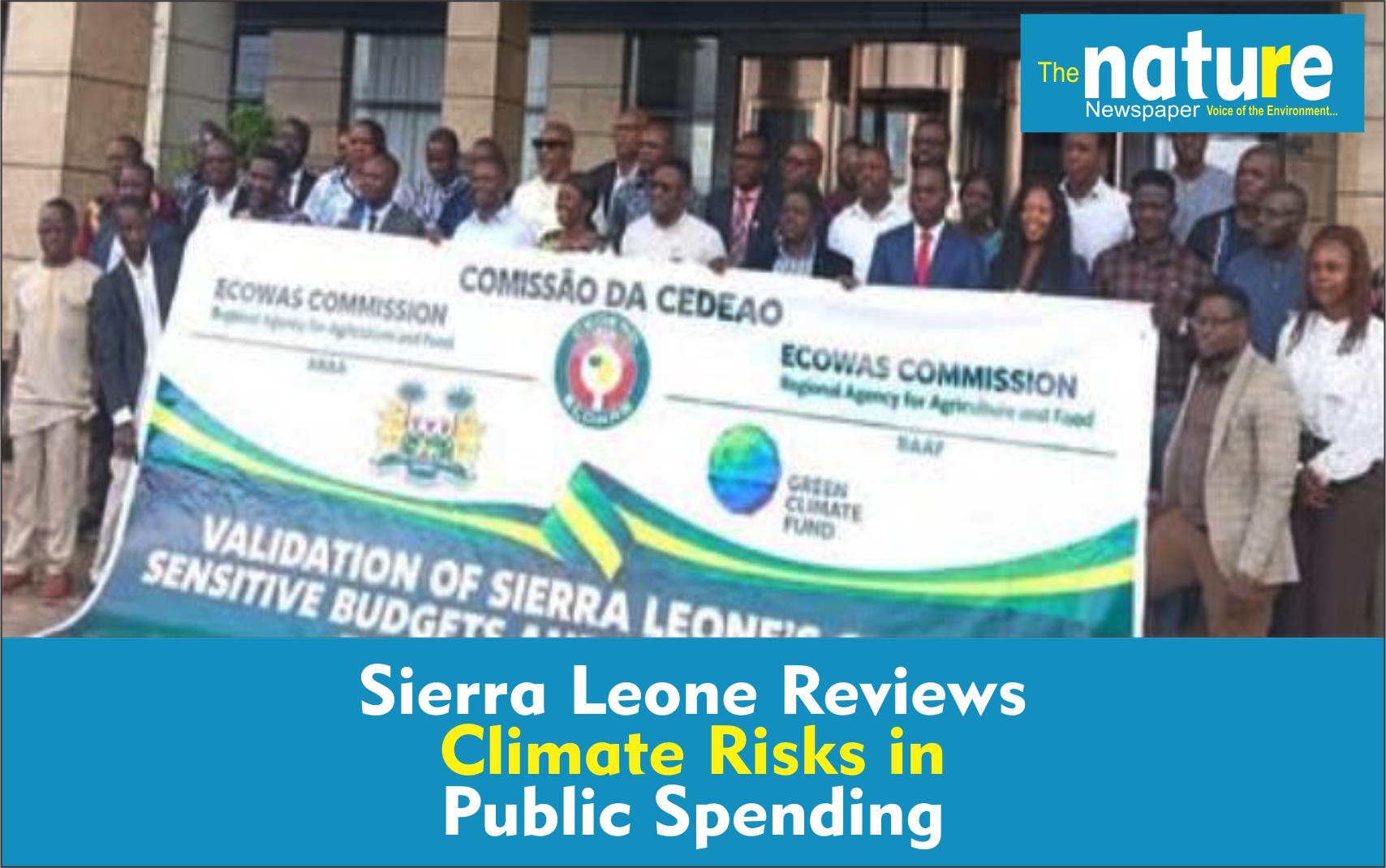
Sierra Leone is reviewing how climate risks are reflected in public budgets, investment decisions and procurement, as the government seeks to direct spending towards resilience. The assessment was examined at a two-day validation workshop in Freetown on October 19–20. It covers institutional arrangements, budgets, public investments and climate finance governance from 2019 to 2025. The work is part of an ECOWAS climate finance readiness project supported by the Green Climate Fund (GCF). Speaking for Environment Protection Agency Executive Chairman Dr Abu-Bakar S. Massaquoi, Project Manager Mo-Bosir Idriss said climate change threatens infrastructure, farming, incomes, food security and public services. He called for a consistent system to track climate spending, climate-risk checks in public investments and procurement, stronger coordination among government agencies, and spending tied to measurable results especially for women, young people and smallholder farmers.
Idriss cautioned that a budget allocation does not prove money was spent or results achieved. Agricultural spending, he said, should be labelled climate-sensitive only when supported by clear evidence and a consistent method. Bubacar Zach Da Sallow, representing the ECOWAS Regional Agency for Agriculture and Food, highlighted regional support that includes 500 tonnes of rice for Sierra Leone’s humanitarian response, school-feeding programmes sourcing produce from women farmers, and planned solar-powered water stations in at least 15 rural communities. He said the regional project had trained more than 500 stakeholders in climate finance and built a pool of experts to develop project proposals. The ECOWAS Bank for Investment and Development has also secured GCF accreditation, opening further financing opportunities. ECOWAS climate finance expert Esso-Sam Agrignan said the US$1.451 million project, implemented with the GCF and the UN Office for Project Services, runs from October 2023 to November 2026.
It supports climate-risk assessments and tools to integrate climate concerns into agricultural policies and investment plans. Sierra Leone is one of six pilot countries whose assessment reports are undergoing validation. Participants reviewed findings in groups focused on climate-sensitive budgeting, sustainable public investment, and monitoring, reporting, verification and sustainable procurement. They are expected to revise the final report and recommend ways to improve climate-spending tracking and coordination. The assessment is intended to strengthen Sierra Leone’s readiness to access climate finance and ensure public investments account for climate risks.