By Mohamed Jaward Nyallay (Strategic Communications Adviser)
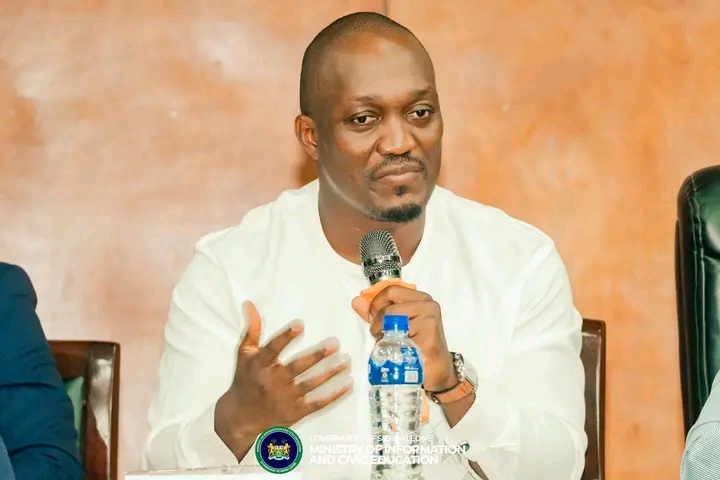
The Government of Sierra Leone has announced plans to transfer the operational management of the Electricity Distribution and Supply Authority (EDSA) to a private operator by the end of 2026, in a major reform effort aimed at improving efficiency, service delivery, and financial sustainability within the country’s energy sector. The disclosure was made by Deputy Minister of Energy I, Edmund Nonie, during the weekly government press briefing held at the Miatta Conference Centre on Tuesday, April 7, 2026.
According to Minister Nonie, the initiative forms part of a broader government reform agenda designed to tackle persistent challenges in electricity distribution, including revenue leakages, operational inefficiencies, and weak cost recovery systems. “By the end of this year, the operations of EDSA will be privatized. A private company will be engaged to run the institution with a clear focus on efficiency and performance,” he stated. “Let me be clear: the government is not selling EDSA. We are only privatizing its operations.”
The proposed arrangement adopts a public-private partnership (PPP) model, under which ownership of EDSA will remain with the state, while day-to-day management and operational control will be transferred to a private entity with the technical capacity and expertise to optimize performance. Energy sector analysts view the move as a critical step toward addressing longstanding structural imbalances, particularly the high cost of electricity generation and distribution relative to revenue collection—an issue that has been more pronounced in rural and underserved communities.
Minister Nonie emphasized that government expenditure on electricity supply, especially in rural areas, continues to outweigh revenue generation, placing a significant burden on public finances. “Government is currently spending significantly more on electricity supply in rural areas than it is able to recover,” he noted. “Despite this, we remain fully committed to expanding access to electricity across the country.” He reaffirmed the administration’s broader electrification agenda under President Julius Maada Bio, stressing that the reform aligns with national development priorities aimed at ensuring reliable and accessible electricity for all Sierra Leoneans.
“By the end of President Bio’s tenure, we are determined to ensure that electricity supply is more reliable, more accessible, and ultimately guaranteed,” he added. As part of ongoing efforts to strengthen EDSA’s financial position, the Deputy Minister revealed that the institution has already initiated partnerships with private sector actors in targeted areas such as revenue collection and debt recovery. “EDSA is already partnering with a private institution to recover outstanding debts,” he said. “These measures are beginning to yield results and are positioning us better in our financial engagements with energy suppliers.
This year, we have not heard of situations where suppliers are threatening to shut down operations.” Government officials say these early collaborations serve as a proof of concept for broader private sector participation, demonstrating the potential for improved accountability, enhanced efficiency, and better financial management through strategic partnerships. The planned transition is expected to introduce performance-based management systems, reduce both technical and commercial losses, and significantly improve customer service delivery—longstanding issues that have undermined the effectiveness of the electricity sector. If successfully implemented, the reform could mark a turning point in Sierra Leone’s energy landscape, paving the way for a more resilient, efficient, and financially viable electricity distribution system.