By Abass Mahmoud Sillah Jr
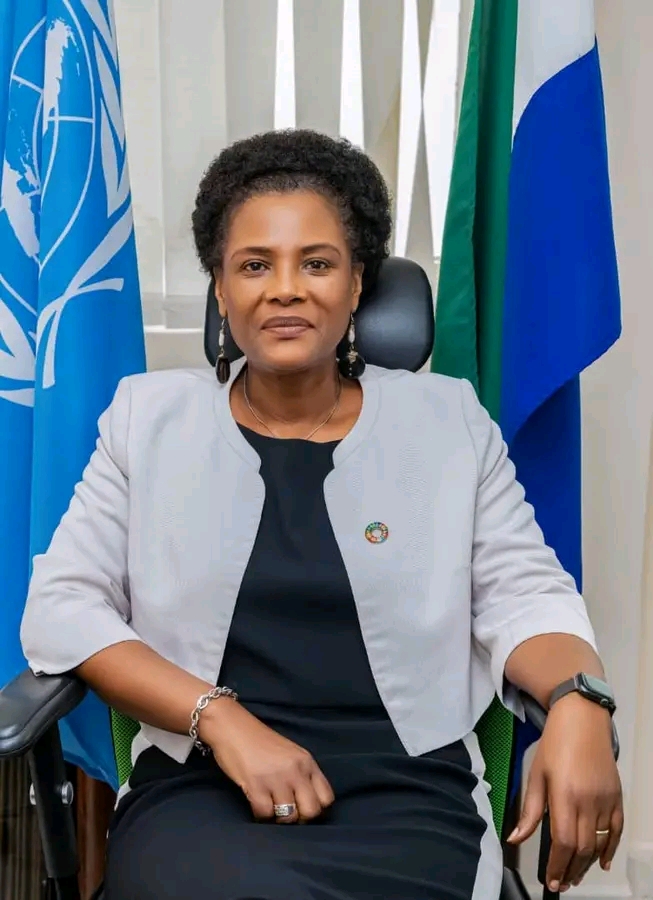
The United Nations Resident Coordinator for Sierra Leone, Seraphine Wakana, has called for urgent and comprehensive legal reforms to strengthen waste management systems in the country, describing the issue as far more than a technical challenge but a central development priority. Speaking at a stakeholder workshop on legal frameworks for waste management, Wakana commended the Government of Sierra Leone for its commitment to improving waste governance and acknowledged the importance of continued collaboration with development partners in advancing national reforms.
She emphasized that waste management is deeply connected to multiple dimensions of sustainable development, including public health, climate action, social inclusion, decent work, and the creation of sustainable cities. She noted that weaknesses in waste systems undermine progress across several Sustainable Development Goals (SDGs), particularly those related to health, sanitation, responsible consumption and production, and climate resilience. According to her, inadequate waste management continues to place a heavy burden on communities, contributing to environmental degradation, public health risks, loss of livelihoods, and widening social inequalities.
These impacts, she stressed, disproportionately affect the poorest and most vulnerable populations. Wakana further observed that rapid urbanization, population growth, and shifting consumption patterns are placing increasing pressure on existing waste management systems in Sierra Leone. She highlighted that informal dumping, open burning of waste, and uncontrolled landfill practices have become widespread, driven largely by systemic weaknesses rather than deliberate action. She argued that addressing these challenges requires strong legal and institutional reforms.
“Effective waste management begins with clear, coherent, and enforceable legal frameworks,” she noted, adding that legislation must clearly define the responsibilities of national and local authorities while setting enforceable standards for waste collection, transportation, treatment, and disposal. Wakana cautioned that without strong legal grounding, even the most advanced technical solutions are unlikely to succeed. She also stressed the importance of introducing and enforcing the principle of Extended Producer Responsibility (EPR), which would hold manufacturers and importers accountable for the full life cycle of their products, particularly in relation to plastics, electronics, and hazardous waste.
She explained that such legal provisions would not only ease pressure on already stretched municipal systems but also encourage more environmentally responsible production and consumption practices. The UN Resident Coordinator reaffirmed the UN’s commitment to supporting Sierra Leone in advancing sustainable waste management reforms as part of broader efforts to achieve inclusive growth, environmental protection, and long-term resilience.