By Abass Mahmoud Sillah Jr
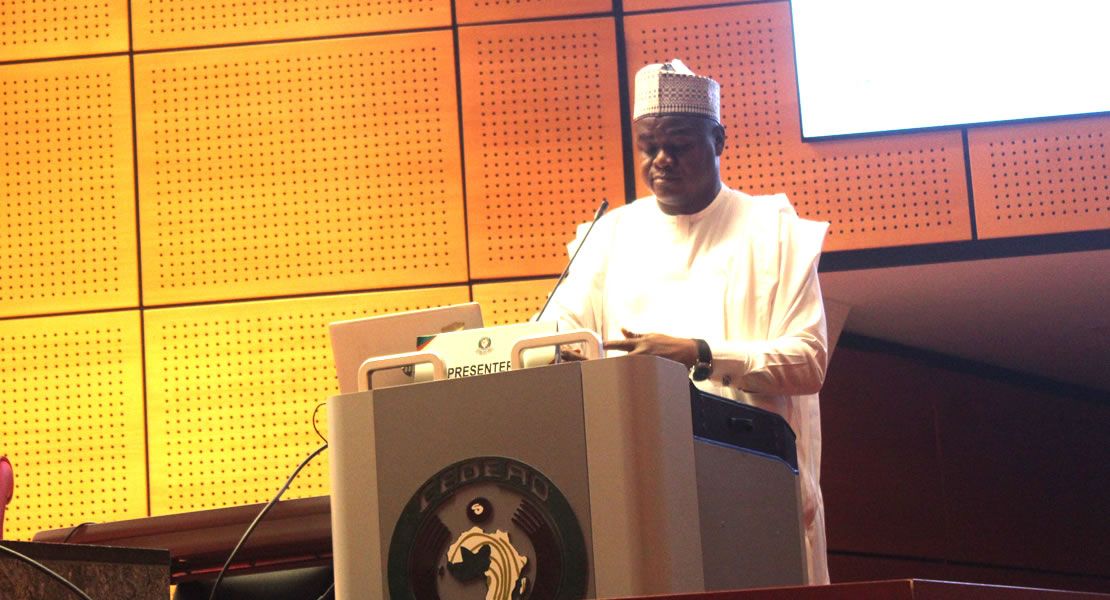
Hon. Saa Emerson Lamina, a member of Sierra Leone’s delegation to the ECOWAS Parliament, has presented the country’s latest status report at the First Ordinary Session currently underway in Abuja, Nigeria, outlining progress in governance, environmental management, and regional integration. Addressing the main chamber, Hon. Lamina conveyed greetings on behalf of Sierra Leone’s Parliament and expressed appreciation to the Government of Nigeria and the ECOWAS Parliament for hosting the session. The report, covering the period from November 2025 to April 2026, focuses on three key thematic areas: the political situation, environmental challenges linked to climate change, and the implementation of ECOWAS community programmes and protocols.
Hon. Lamina noted that Sierra Leone’s political landscape during the review period has been guided by the Government’s “Year of Action” agenda, aimed at accelerating economic diversification and advancing constitutional reforms following the 2023 general elections. He highlighted continued political pluralism and inclusivity, pointing to the return of the main opposition All People’s Congress (APC) to parliamentary proceedings after signing a National Unity Agreement with the Government. The development, he said, followed mediation efforts by regional actors, including ECOWAS, reinforcing commitments to dialogue and inclusive governance. On governance, the report cites improvements in the rule of law, referencing gains in the 2025 World Justice Project Rule of Law Index.
Key reforms include the implementation of the Justice Sector Reform Strategy (2024–2030) and the operationalization of the Criminal Procedure Act 2024. Institutions such as the Independent Commission for Peace and National Cohesion (ICPNC), working alongside the Inter-Religious Council, were commended for their role in early warning, conflict prevention, and promoting dialogue among political actors. The Electoral Commission for Sierra Leone (ECSL) is undertaking reforms ahead of the 2028 elections, focusing on improving transparency, strengthening voter registration systems, and reviewing electoral frameworks through the Tripartite Committee. On human rights, the report notes a reduction in alleged arbitrary arrests and detentions, alongside improvements in access to justice through expanded legal aid services and judicial reforms.
It also highlights increased press freedom, growing civic engagement, and the enforcement of the Prohibition of Child Marriage Act 2024. Efforts to address sexual and gender-based violence (SGBV), as well as ongoing national reconciliation initiatives, were also underscored as key priorities contributing to political stability. Turning to environmental issues, Hon. Lamina described climate change as a major concern for Sierra Leone, despite its relatively low greenhouse gas emissions. The Government is pursuing strategies to reduce socio-economic vulnerability by 50 percent by 2030. Central to this effort is the “Feed Salone” initiative, which aims to boost food self-sufficiency through mechanized agriculture, increased private sector participation, and import substitution.
The programme has already contributed to increased food production and job creation. However, the report warns of persistent environmental threats, including extreme weather events, coastal erosion, deforestation, and biodiversity loss. Government interventions include enhanced disaster preparedness by the National Disaster Management Agency (NDMA), the development of a national risk financing strategy, and the introduction of a revised Disaster Risk Management Policy for 2026. Additional measures include the protection of the Guma Dam catchment area, drainage clearance, road rehabilitation, and expanded investment in renewable energy, particularly solar power and rural electrification.
The report also acknowledges ongoing environmental risks associated with mining activities, including land degradation and water pollution. In response, authorities have strengthened regulatory enforcement through the National Minerals Agency and the Environment Protection Agency, while promoting sustainable mining practices and local beneficiation policies. On regional obligations, Sierra Leone is reported to be fully compliant with the ECOWAS Community Levy, maintaining a 100 percent remittance record. Progress was also highlighted on key infrastructure and integration projects, including the completed ECOWAS Logistics Depot in Lungi, which is now awaiting full operationalization, and the near-completion of the border market at Wai Village in Pujehun District, aimed at boosting cross-border trade.
The enactment of the National Early Warning and Response Mechanism Centre (NEWRMC) Act 2025 was cited as a major step toward strengthening conflict prevention systems. In addition, Sierra Leone has implemented ECOWAS directives on low-sulfur fuels and expanded free roaming services with several countries, including Liberia, Guinea, Côte d’Ivoire, and The Gambia—reducing communication costs and enhancing regional connectivity. Concluding his presentation, Hon. Lamina reaffirmed Sierra Leone’s commitment to the principles and objectives of ECOWAS, particularly in promoting democracy, peace, regional integration, and sustainable development. The presentation was well received by delegates, reinforcing Sierra Leone’s position as an active participant in regional cooperation and reform initiatives.