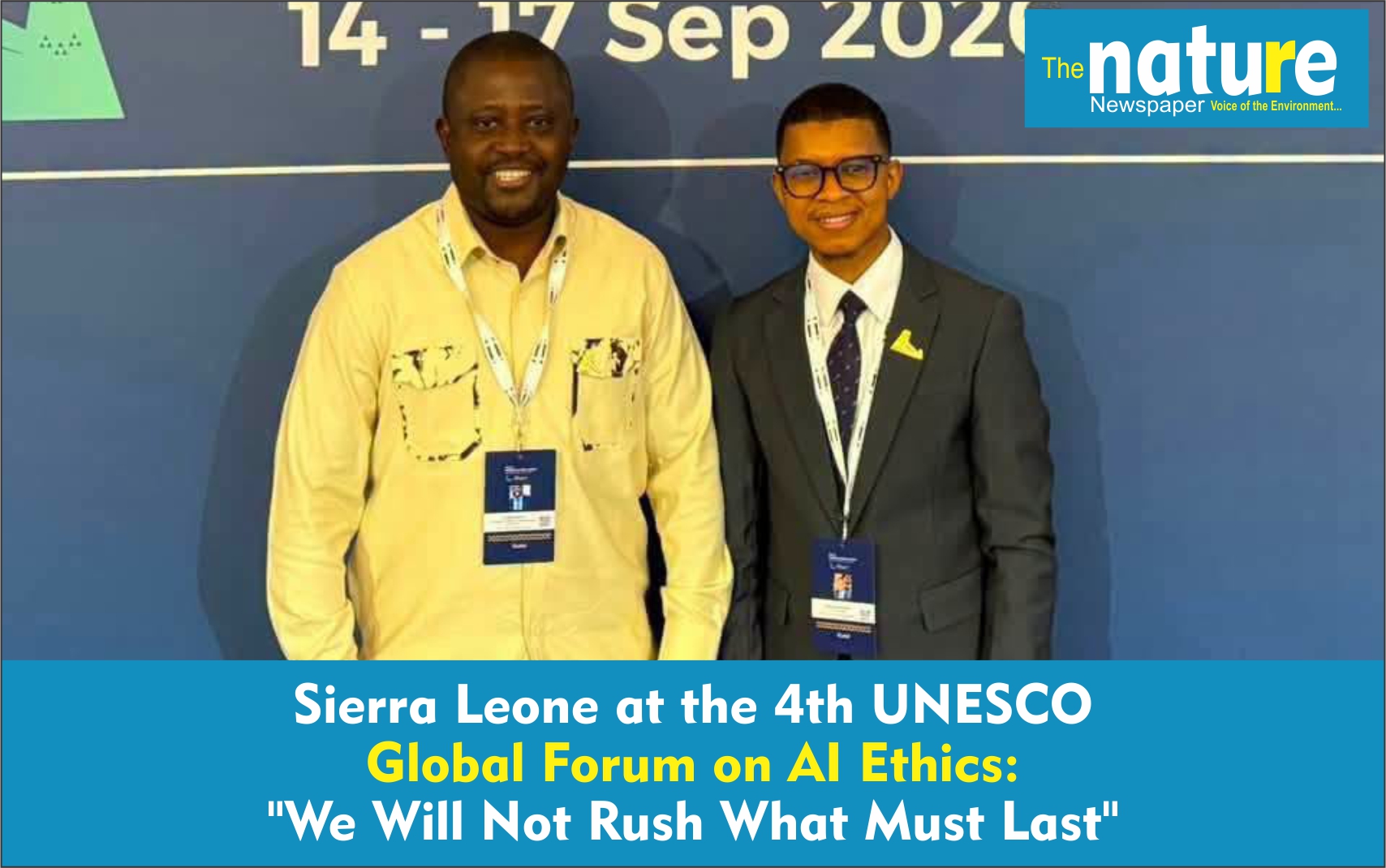
Riyadh, Kingdom of Saudi Arabia When the world’s policymakers gathered in Riyadh for the 4th UNESCO Global Forum on the Ethics of Artificial Intelligence, the pressure was unmistakable: enact AI laws, and enact them fast. But Sierra Leone’s representative arrived with a different message one that stopped conversations and started debates. “We have chosen not to rush into enacting an AI law.” That single sentence, delivered with composure and conviction, cut through the urgency. It was not a declaration of reluctance. It was a declaration of responsibility. Sierra Leone’s position is rooted in a principle that too often gets lost in the race to regulate: the quality of the law matters more than the speed with which it is enacted. For a nation where digital infrastructure is still expanding, where connectivity gaps remain real, and where they lived experience of citizens diverges sharply from the assumptions baked into Silicon Valley’s training data, copying someone else’s legislative template is not governance it’s abdication. “Effective legislation must be grounded in a clear understanding of our realities,” the Sierra Leone delegation affirmed. And those realities are not abstract. They are lived in communities still waiting for reliable internet, in health systems that could either be strengthened or sidelined by automation, in classrooms where AI could either bridge gaps or deepen them. Sierra Leone’s message resonated far beyond its own borders because it named what many developing countries experience but few articulate so directly: AI does not arrive as a neutral force.
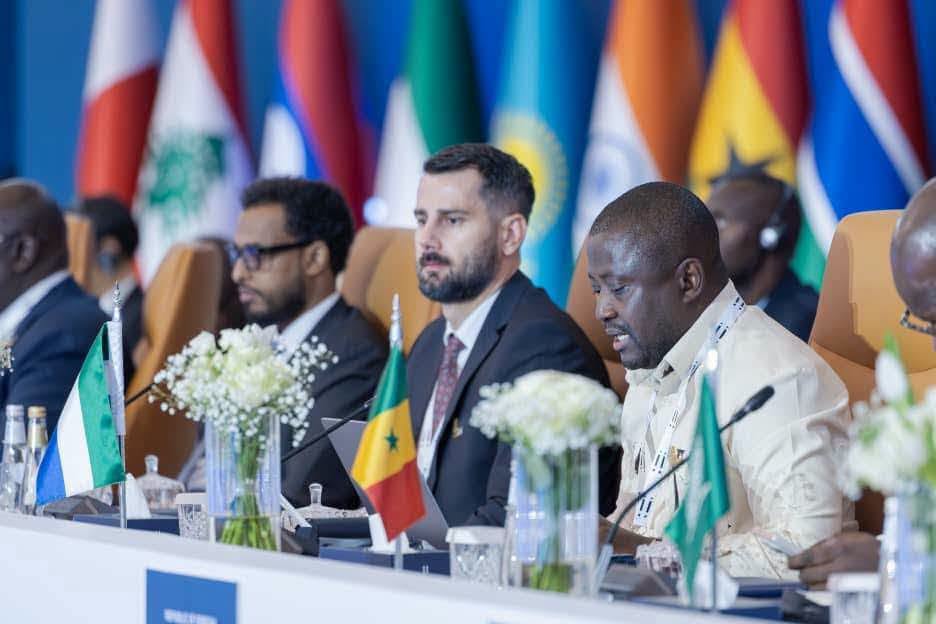
Automated decision-making can reproduce and even amplify existing inequalities. Biased or incomplete data can generate discriminatory outcomes at scale. Technology-facilitated violence, misinformation, synthetic media, and algorithmic discrimination are emerging faster than most legal frameworks can respond. For developing nations, these risks are not theoretical. They are immediate. They are structural. And they cannot be addressed by legislation written for a different context. Perhaps the most striking element of Sierra Leone’s intervention was its insistence on a constituency that rarely features in AI governance discussions: those who are not online at all. “Those who are offline must not be disadvantaged simply because they cannot participate in an increasingly digital society.” This is not nostalgia for a pre-digital past. It is a demand that the future be built to include everyone not just those who already have access. A regulatory framework that only protects the connected is not a framework at all. It is a wall. Sierra Leone’s approach insists that innovation and inclusion are not competing goals. They are inseparable. Any AI strategy that leaves citizens behind is not innovation it is exclusion dressed in technical language. Sierra Leone did not come to Riyadh to delay.
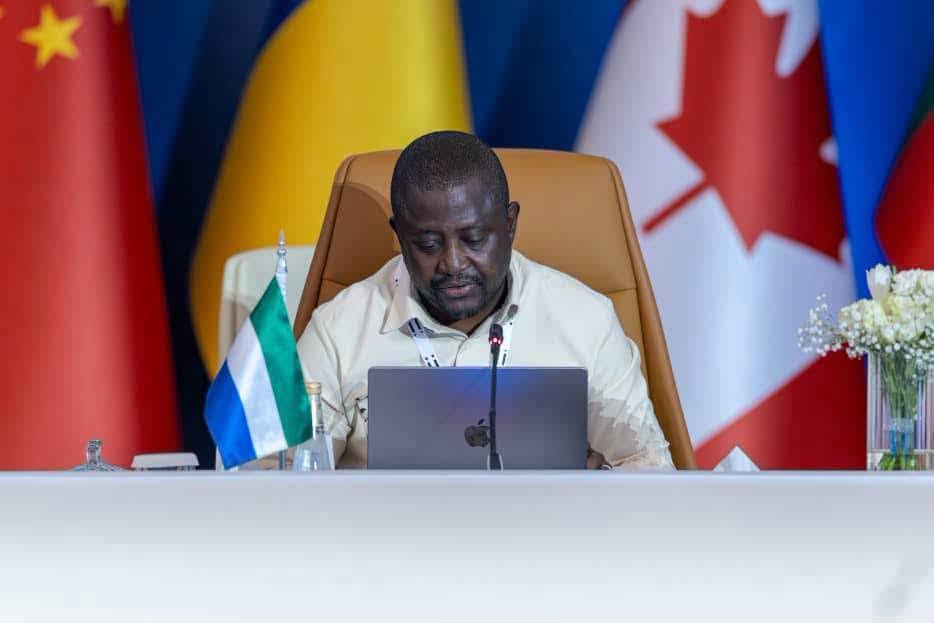
The delegation came to draw the map before walking the road. The objective is unambiguous: harness AI for development while ensuring that technology remains grounded in human rights, inclusion, fairness, and the rule of law. This means building legislation from the ground up informed by Sierra Leone’s specific challenges, shaped by its people’s needs, and tested against the realities of its institutions. It means consulting widely, understanding the technology deeply, and refusing to let the pace of global trends dictate the quality of national policy. In a forum where speed was the dominant register, Sierra Leone’s voice was the one that reminded the room: governance is not a race. The country that takes time to understand its own landscape before writing its laws is the country most likely to write laws that actually work. That is not caution. That is leadership. Sierra Leone’s delegation to the 4th UNESCO Global Forum on the Ethics of AI reaffirmed a simple truth: the nations that legislate with clarity and conviction not haste will be the ones whose citizens are truly protected in the age of artificial intelligence.