By Abass Mahmoud Sillah Jr
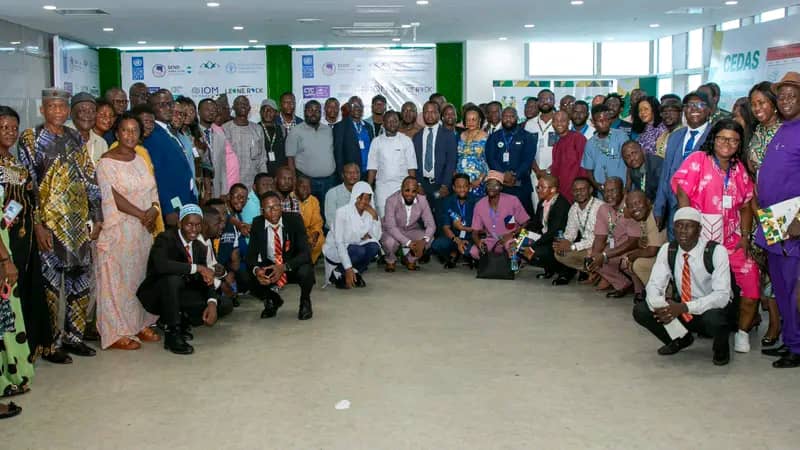
Freetown City Council Auditorium played host to the opening of Day One of the Collaborating, Learning, and Adapting Conference 2026 (CLA26), as government and partners intensified efforts to strengthen environmental governance through data-driven decision-making. Held under the theme “From Data to Decisions: Strengthening Environmental Governance through Evidence and Insights,” the conference brought together a broad coalition of stakeholders, including ministries, departments and agencies, boundary partners, international development organisations, civil society groups, sponsors, the media, and school nature clubs.
Participants reviewed progress made since CLA25, examined lessons learned, and mapped out strategies to scale, harmonise, and accelerate environmental governance and service delivery across the country. Under the climate change pillar, officials highlighted significant internal reforms aimed at improving institutional performance. These include strengthened systems for organisational excellence, which have enhanced delivery discipline and boosted operational efficiency across the environmental sector.
A major highlight of the discussions was Sierra Leone’s progress in implementing its Multilateral Environmental Agreements (MEAs). Authorities disclosed that the country successfully finalised and launched its Nationally Determined Contribution (NDC 3.0) during the global climate summit, COP30, marking a critical step in meeting international climate obligations. In addition, Sierra Leone completed and launched an NDC Scorecard in partnership with Trócaire, finalised its first district-level Loss and Damage Report with SEND Sierra Leone, and advanced its First Biennial Transparency Report (BTR) to completion.
Further strides include the operationalization of the National Measurement, Reporting, and Verification (MRV) system, the launch of the ICAT initiative to strengthen climate transparency, and the commencement of a Technology Needs Assessment (TNA). The government also completed a Climate Mobility Assessment Report with support from International Organization for Migration Sierra Leone. Experts at the conference delivered a series of fireside presentations focusing on the country’s readiness to implement NDC 3.0, its 2030 climate roadmap, and key insights from the BTR development process.
Discussions also explored how the Loss and Damage Report contribute to a stronger national climate response, as well as opportunities for scaling climate mobility strategies. Development partners, in their statements, underscored the growing importance of data in shaping environmental governance. They emphasised the need to foster a culture of evidence-based decision-making, while also calling for enhanced regional collaboration, data sharing, and knowledge exchange to improve environmental outcomes across borders. On the financing front, the conference revealed notable achievements in revenue mobilisation.
Sierra Leone generated NLe 168.9 million in internal revenue—surpassing its annual target by over 105 percent—while also mobilising $7.8 million in climate finance and securing $16 million in mine rehabilitation bonds to support environmental restoration and accountability. Day One concluded on a creative and reflective note, with students from the Ahmadiyya Muslim Secondary School presenting an educative skit titled “The Rising Tides: The Time to Act is Now,” highlighting the urgency of climate action and community awareness. The conference is expected to continue with Day Two focusing on biodiversity and nature conservation, as Sierra Leone deepens its commitment to sustainable environmental management and climate resilience.