By Staff Writer
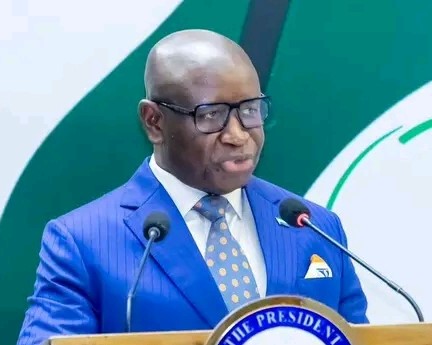
His Excellency President Dr. Julius Maada Bio has officially launched the Economic Community of West African States (ECOWAS) Liquefied Petroleum Gas (LPG) Programme in Sierra Leone, marking a major milestone in the country’s transition to clean and sustainable cooking energy. The high-level launch, held at the Radisson Blu Hotel, introduced a pilot phase that will see the distribution of 10,000 clean cooking gas canisters to households nationwide. The event formed part of a regional policy dialogue on clean cooking, gender equality, and child protection, bringing together government officials, regional leaders, development partners, and private sector stakeholders to accelerate access to safe and affordable cooking solutions across West Africa.
Delivering the keynote address, President Bio underscored the urgency of addressing energy poverty, describing access to clean cooking as both a public health imperative and a development priority. He revealed that nearly 10,000 Sierra Leoneans died in 2021 from air pollution linked to traditional cooking methods such as firewood and charcoal. “What we confront today is not confined to Sierra Leone but Africa as a whole. The lack of access to clean cooking demands our collective response,” the President stated. He emphasized that indoor air pollution disproportionately affects women and children, noting that the issue is deeply rooted in poverty, inequality, and limited access to modern energy alternatives.
President Bio disclosed that upon taking office in 2018, his administration found no clear accountability framework for clean cooking. He said the government has since established a dedicated Clean Cooking Delivery Unit to coordinate policy reforms and drive implementation. He called on private sector actors to invest in the clean energy space, highlighting the significant market potential and the enabling policy environment already in place. “Our women do not lack solutions; they lack champions,” he said, stressing that women must play a central role not only as beneficiaries but also as entrepreneurs and leaders within the clean cooking value chain. He further challenged stakeholders to intensify community engagement over the next 100 days, particularly in areas already transitioning to cleaner energy solutions.
First Lady Fatima Maada Bio described the initiative as critical to improving the daily lives of women and families across the country. She noted that many households still rely on open-fire cooking, exposing women and children to harmful smoke and long-term health risks. The First Lady also pointed to the government’s school feeding programme, which currently supports over 600,000 pupils, noting that many meals are still prepared using traditional methods that endanger cooks, teachers, and students. “This must change,” she said, calling for the nationwide adoption of cleaner cooking systems in both homes and schools.
Minister of Energy Cyril Arnold Grant highlighted the scale of the challenge, revealing that 72 percent of households depend on firewood, 22 percent use charcoal, and only 1.5 percent have access to clean cooking solutions. He described energy poverty as a major contributor to gender inequality and adverse health outcomes, stressing the need for urgent and sustained intervention. Among the distinguished participants was Rachel Ruto, who called for a continent-wide push to ensure that no woman is forced to cook in smoke and that environmental degradation from charcoal and firewood is reduced. Kandeh Kolleh Yumkella, Chairman of the Presidential Initiative on Climate Change, Renewable Energy and Food Security, emphasized the urgency of scaling up clean cooking adoption nationwide.
Special addresses were also delivered by Samira Bawumia, Global Ambassador for the Clean Cooking Alliance, alongside representatives from the Ministry of Environment and Climate Change and ECOWAS. The launch of the LPG Programme represents a significant step toward improving public health, advancing gender equality, and promoting environmental sustainability in Sierra Leone. By expanding access to clean household energy, the initiative is expected to reduce harmful emissions, protect forests, and create economic opportunities—particularly for women. As Sierra Leone positions itself within a broader regional effort, the success of the programme will depend on sustained political commitment, private sector participation, and community-level adoption. For many households, however, the introduction of clean cooking gas offers more than convenience—it represents a pathway to healthier lives and a more sustainable future.