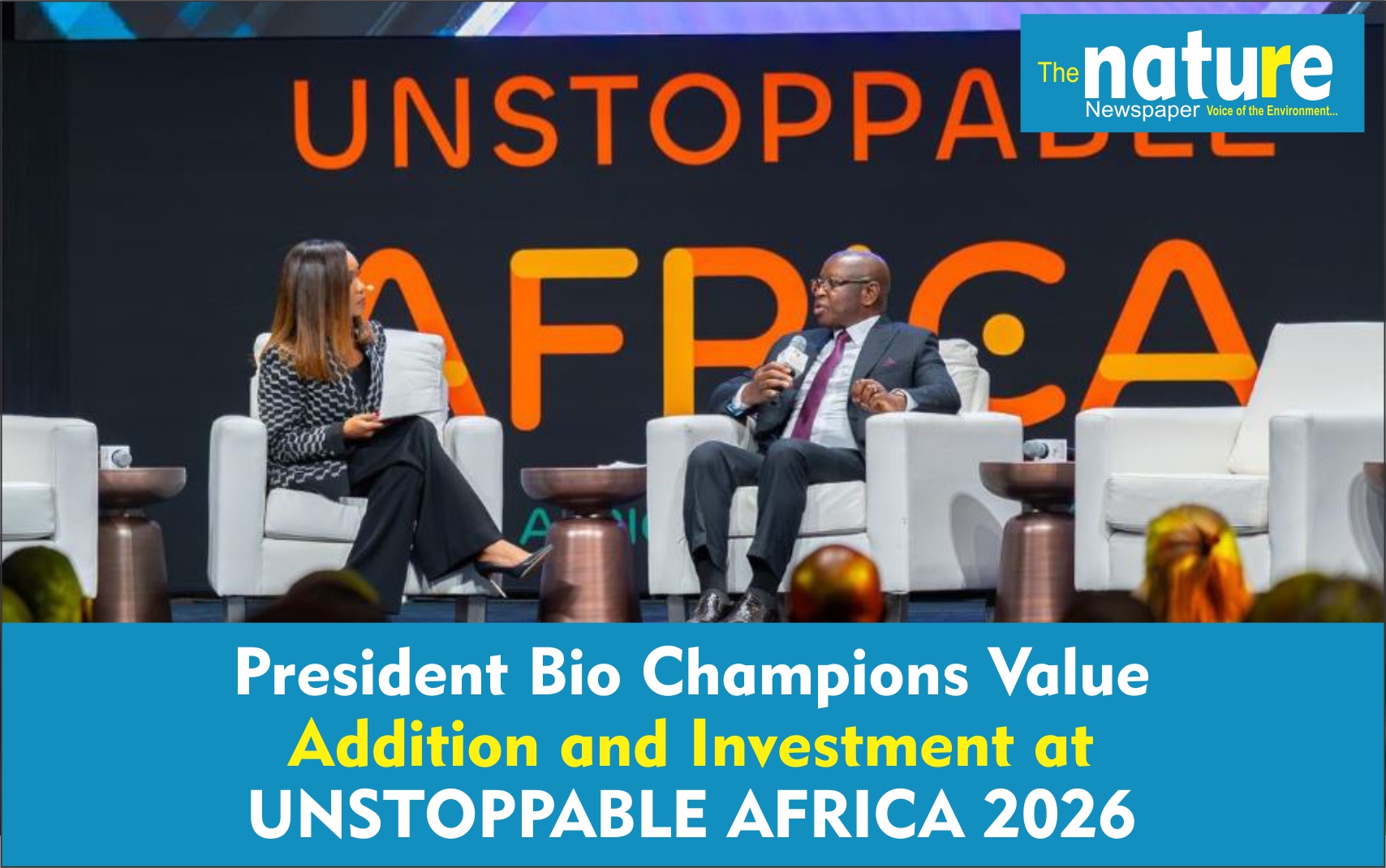
President Julius Maada Bio has called on African nations to transform how they manage their mineral wealth moving beyond exporting raw materials to building industries that process and add value to those resources on the continent. Speaking during a high-level fireside conversation at UNSTOPPABLE AFRICA 2026 in New York, President Bio became the first African Head of State to open this year’s programme. The gathering drew heads of state, investors, policymakers and business executives to explore strategies for accelerating Africa’s economic growth and expanding its role in global markets. Africa, the President argued, can no longer afford to remain a supplier of unprocessed commodities while the wealth generated from those resources is captured elsewhere. Processing minerals locally, he said, would strengthen national economies, expand industrial capacity and create meaningful jobs particularly for the continent’s fast-growing youthful population. “Africa must move beyond the extraction and export of raw materials. We must process and transform our minerals on the continent, while investing in the infrastructure needed to drive value addition, strengthen our economies, and create meaningful jobs and opportunities for our young people,” he said. His message is especially timely, as critical minerals have become central to the global economy through their role in clean-energy technologies, manufacturing and the energy transition.
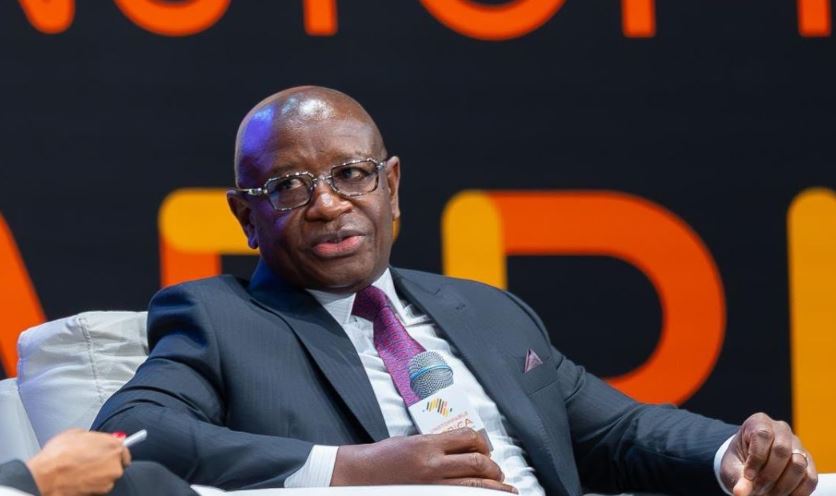
Yet despite Africa’s significant deposits, the continent captures only a small share of the value created from processing them. President Bio stressed that local beneficiation could spur demand across energy, transport, engineering, logistics and professional services, while opening supply chains long dominated by foreign firms to African companies. Infrastructure, he noted, is decisive. Without reliable energy, transport networks, ports and digital connectivity, resource-rich countries risk continuing to export raw materials while importing finished goods at far higher costs. Africa, he maintained, needs an investment model that links natural resources to infrastructure, industrial production, skills development and job creation. Convened under the theme “Powering Business, Scaling Economies, Shaping the Future,” UNSTOPPABLE AFRICA 2026 marked the fifth edition of the Global Africa Business Initiative, bringing more than 2,000 African and global leaders to New York on 20–21 September. The event was convened by UN Secretary-General António Guterres and African Union Commission Chairperson Mahmoud Ali Youssouf, and organized by the United Nations Global Compact. Discussions spanned critical minerals, infrastructure, trade, energy, artificial intelligence, creative industries and sport reflecting a broad push to reposition Africa from an exporter of commodities and talent to a builder of African-owned businesses and value chains.
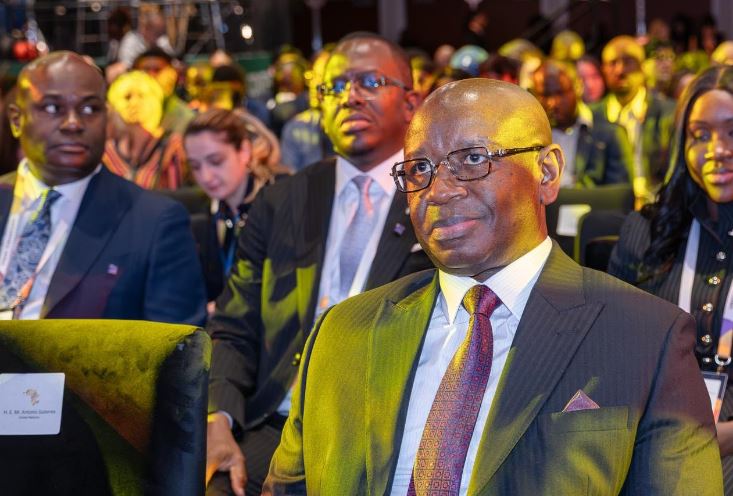
For Sierra Leone rich in iron ore, diamonds, rutile, bauxite and gold the platform offered a chance to showcase its investment and industrialization ambitions. The 2025 UNSTOPPABLE AFRICA Insights Report had already highlighted the country’s policy direction toward reducing raw iron ore exports and embracing mineral beneficiation. President Bio’s participation placed Sierra Leone firmly within the wider continental conversation about ownership, processing capacity and economic sovereignty. Central to his message was the need to connect economic growth with opportunities for young Africans. Expanding industries around minerals could generate jobs not only in mining but across engineering, manufacturing, construction, technology and finance provided investment is matched by skills development and support for local businesses. President Bio’s intervention ultimately centred on one question: how can Africa turn its vast natural-resource wealth into sustainable prosperity for its people? His answer was clear greater value addition, stronger infrastructure, increased investment, and a decisive shift toward processing and manufacturing within Africa. The challenge now, he said, is translating that vision into practical projects, investment commitments and technology partnerships capable of delivering measurable results. For Sierra Leone, and for the continent, the message was the same: to move from exporting resources to creating value, from extraction to industrialization, and from supplying global markets to helping shape them.