By Abass Mahmoud Sillah Jr
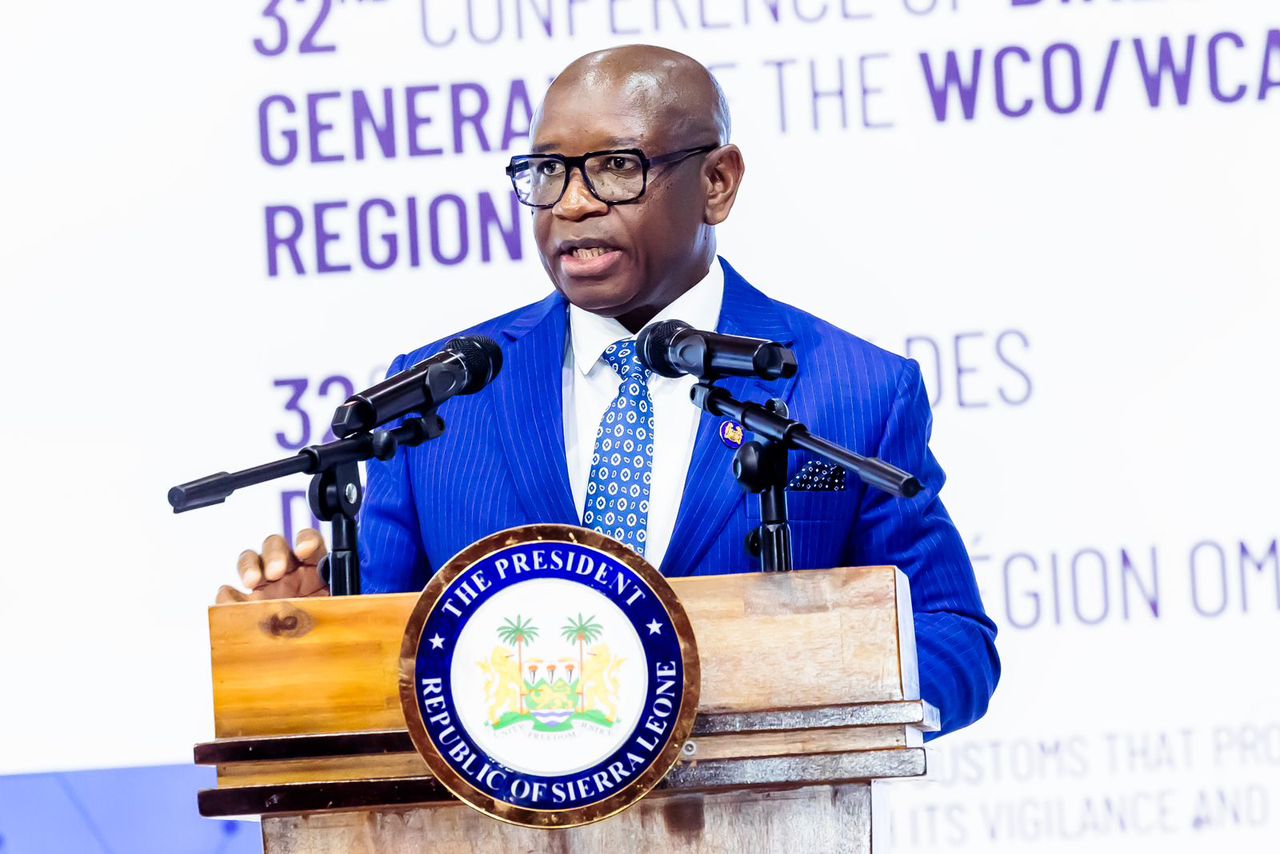
President Julius Maada Bio has called for stronger regional trade integration, improved border management, and the full implementation of the ECOWAS Common External Tariff as key measures to boost lawful trade, protect local industries, and enhance economic security across West Africa. The President made the call while delivering a keynote address at the 32nd Conference of Directors General of Customs of the World Customs Organization (WCO) West and Central Africa Region, held at the Freetown International Conference Centre on Thursday. Addressing delegates under the theme, “A Customs Service that Protects Society Through Its Vigilance and Commitment,” President Bio described customs administration as a critical pillar of national security, economic governance, and regional stability.
“Customs is not simply a checkpoint at the edge of the state; it is the frontline of the state itself,” President Bio stated. “Most people think about the medicine in pharmacies, the food in markets, and the equipment in hospitals, but they do not often consider the line that stands between legitimate goods and what must never cross our borders. You are that line.” The President emphasized that customs institutions play an essential role in protecting citizens and preserving public trust, noting that every intercepted shipment of illegal goods represents lives saved and communities protected. He said the seizure of counterfeit medicines helps safeguard public health, while efforts to curb the trafficking of illegal weapons and narcotics contribute to national and regional security.
President Bio warned that countries across West and Central Africa continue to face growing threats from illicit trade, terrorism financing, narcotics trafficking, environmental crimes, and the smuggling of arms and endangered species. “We cannot confront 21st-century threats with outdated systems or outdated thinking,” he cautioned, stressing that secure, transparent, and efficient border systems are necessary for sustainable commerce, investment, and regional integration. The Sierra Leonean leader also underscored the urgency of digital transformation within customs administrations, describing modern technology as essential to improving efficiency, reducing corruption, and facilitating legitimate trade.
He highlighted the importance of automation, electronic single-window systems, digital payments, cargo tracking technologies, non-intrusive inspections, and advanced data analytics in modern border management. “When customs administrations embrace technology, the gains are clear. Automation and digital systems accelerate legitimate trade while reducing opportunities for criminal activity and corruption,” he said. Speaking in his capacity as Chairman of the ECOWAS Authority of Heads of State and Government, President Bio called for stronger collaboration and intelligence sharing among member states to effectively tackle increasingly sophisticated transnational crimes and trade-related threats.
He reaffirmed Sierra Leone’s commitment to working closely with regional and international partners to establish real-time intelligence-sharing systems capable of responding swiftly to evolving security and economic challenges. The conference brought together Directors General of Customs, regional policymakers, development partners, and international stakeholders to deliberate on strategies aimed at strengthening customs administration, improving border security, and promoting trade facilitation throughout West and Central Africa.