By: Ibrahim Tejan Kella
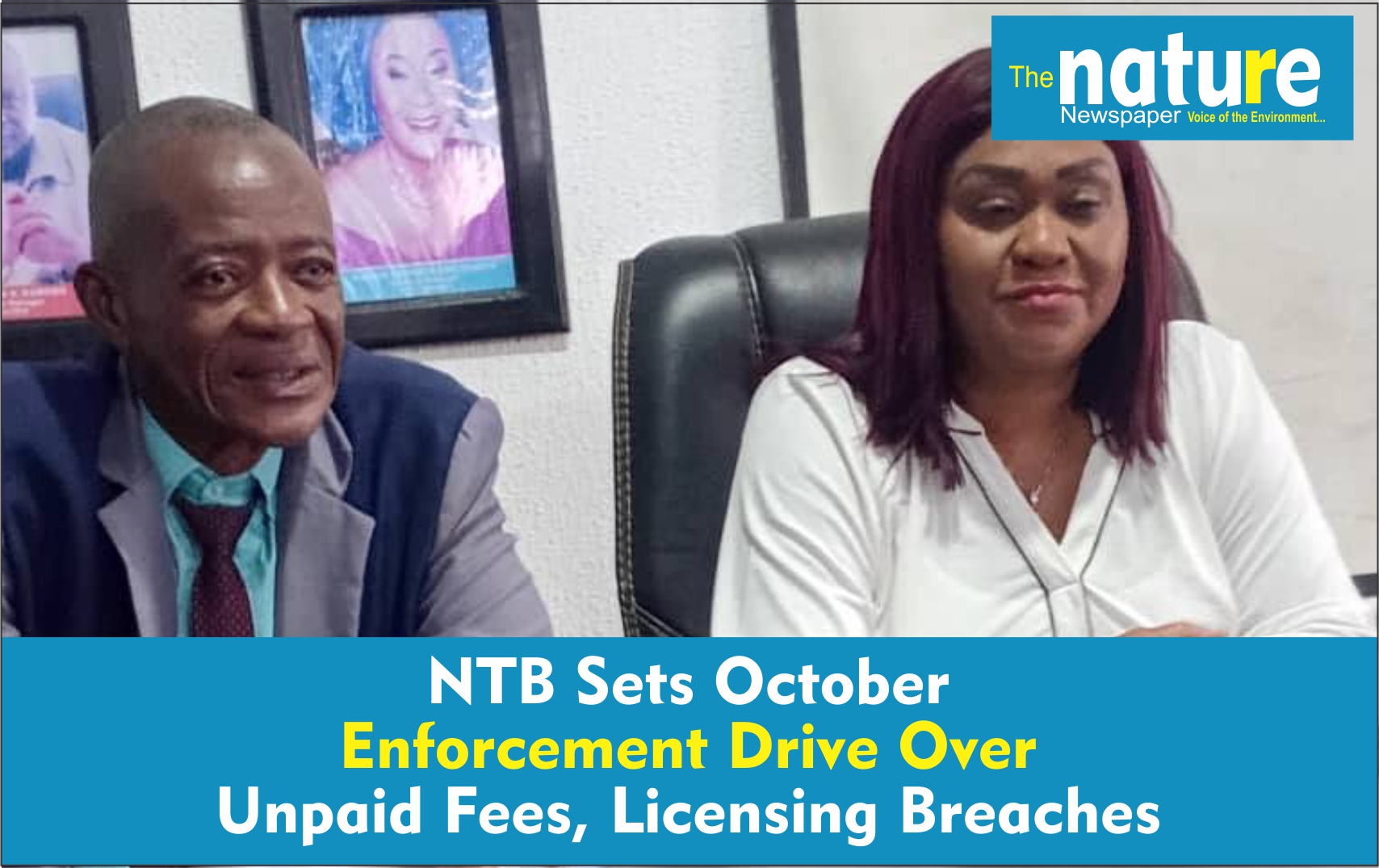
The National Tourist Board (NTB) has announced a nationwide enforcement campaign beginning in October to compel tourism establishments to settle outstanding statutory fees, regularise their licenses and comply with prescribed operational and service standards. The campaign will commence in the Northwest on 16 October, before moving to the Southeast on 27 October, where the exercise is scheduled to run until 13 November, according to NTB General Manager Fatmata Mida Carew. Mrs Carew said the campaign has the backing of the Ministry of Tourism and Cultural Affairs and responds to growing concerns within Government over persistent non-compliance by hotels, restaurants, beach bars, nightclubs, casinos, snack bars and other tourism-related establishments. She said the exercise is designed not only to recover outstanding tourism development and licensing fees but also to enforce standards and ensure that businesses operating in the sector comply with the law. According to Mrs Carew, the NTB generates revenue through its engagement with private-sector tourism operators, with funds collected ultimately accruing to Government for the development of the tourism sector and other national priorities. She expressed concern that while some tourism operators continue to call for improved public infrastructure and services, including electricity and water, some have failed to fulfil their own statutory obligations to Government.
“If what you use yourself you do not do, and you want Government to provide everything for you, then what do we realize?” she asked, stressing the need for tourism businesses to meet their financial and regulatory responsibilities. Mrs Carew said the Board had observed persistent refusal by some operators to pay licensing fees and other statutory charges despite continuing to conduct commercial activities. She said the situation had become a growing concern for the Ministry of Tourism and Cultural Affairs, the NTB Board of Directors and the Ministry of Finance, particularly because tourism is an important economic sector and a source of Government revenue. Mrs Carew recalled that the legal framework establishing the National Tourist Board dates back to the Tourism Development Act of 1990, with the Board commencing operations in 1991. She said tourism establishments are required by law to obtain valid licences before operating, warning that businesses operating without the necessary authorisation could face closure. “No hotel, restaurant, food business, casino, online betting company, nightclub, snack bar or beach bar should operate in this country without a valid licence from the National Tourist Board,” she stated. Drawing a comparison with other regulatory institutions, Mrs Carew noted that pharmacies, for example, are required to obtain appropriate licences before operating, and said businesses within the tourism sector must similarly comply with their licensing obligations. She further alleged that some operators obtain licences but subsequently continue conducting business after failing to renew them or pay applicable fees.
The campaign will also target outstanding tourism development and land-related obligations involving operators who have been allocated land for tourism purposes. Mrs Carew explained that businesses allocated land for activities such as beach bars and other tourism developments are expected to fulfil the financial obligations attached to those allocations. She said operators experiencing genuine difficulties in settling outstanding fees could engage the relevant authorities to discuss payment arrangements, including structured payment plans subject to the necessary approval. However, she warned that businesses would not be permitted to continue fully utilising Government-allocated land while refusing to meet their statutory financial obligations. Mrs Carew stressed that the enforcement exercise would extend beyond revenue collection and licensing to the quality of tourism services being provided to visitors. She said NTB inspection teams would assess establishments against prescribed operational and service standards, including sanitation, kitchen facilities, customer service and general operating conditions. She warned that establishments found operating below the required standards could be ordered to close temporarily to give operators an opportunity to rectify identified deficiencies. “If you go out and realize that your kitchen is not up to standard, the place smells, and you service people very poorly, the NTB will shut you down,” she warned. She clarified that such closures would initially be intended to enable operators to correct deficiencies, but warned that establishments that fail to comply with corrective measures could face permanent closure in accordance with the applicable regulatory framework.
The General Manager also emphasized the importance of meeting regional and international tourism standards, noting that the sector operates within classification and standardization criteria, including relevant ECOWAS requirements. She said stronger enforcement of standards was necessary as Sierra Leone continues to attract increasing numbers of visitors. Mrs Carew cited NTB figures showing that tourist arrivals had increased from about 50,000 in an earlier period to approximately 150,000 in 2025. She added that more than 20,000 visitors recorded in 2025 came primarily for leisure purposes. She said the increase in leisure visitors reinforced the need for hotels and other tourism establishments to provide accommodation and services that meet acceptable standards. Mrs Carew also referred to concerns raised by members of the United Nations community in Sierra Leone regarding the availability of decent, standard-compliant accommodation, saying the NTB had received complaints about the quality of some facilities. She said the Board would therefore intensify inspections to ensure that establishments serving visitors provide facilities and services consistent with the standards expected of a growing tourism destination. The enforcement campaign will be conducted in collaboration with several institutions, including the Sierra Leone Police, the Anti-Corruption Commission (ACC), the NTB Board of Directors and the Directorate of Tourism and Cultural Affairs, among other relevant stakeholders. Mrs Carew said the involvement of multiple institutions would strengthen the enforcement process and ensure greater accountability among tourism operators. She stressed that the exercise is not merely a revenue-collection drive but a broader regulatory intervention aimed at improving compliance, strengthening tourism standards and supporting the sustainable development of the sector. She urged tourism operators to regularise their businesses, settle outstanding statutory fees, renew expired licences and address identified operational deficiencies before enforcement teams arrive at their establishments. The campaign comes as Government continues efforts to strengthen domestic revenue mobilisation while promoting tourism as a contributor to employment, investment, foreign-exchange earnings and broader economic development.