By Abass Mahmoud Sillah Jr
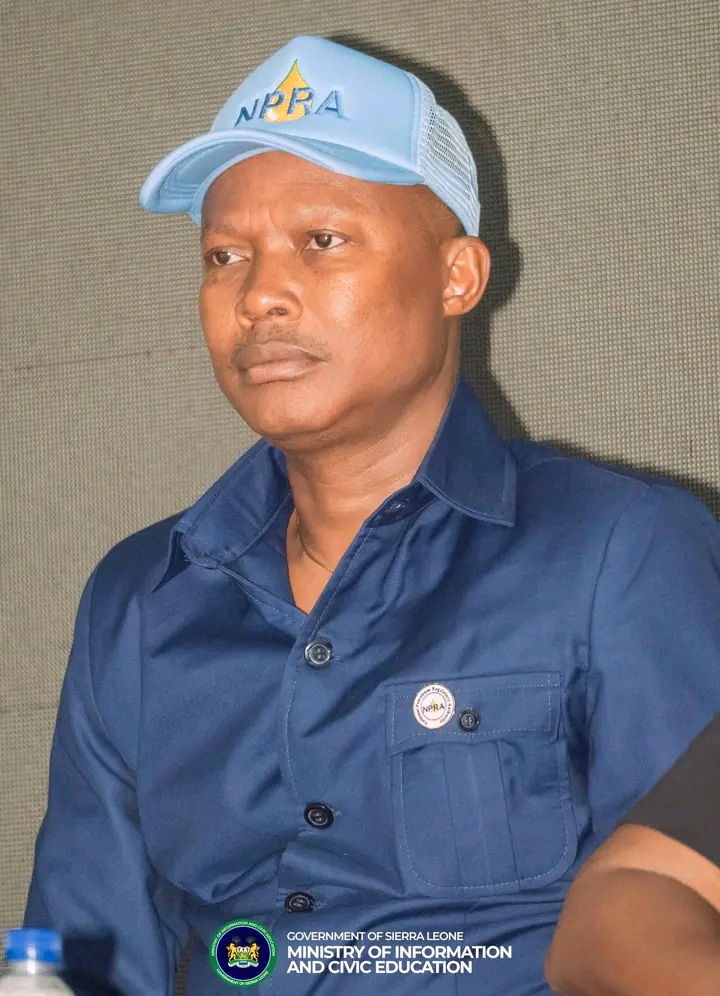
The Director General of the National Petroleum Regulatory Authority, Dr. Brima Baluwa Koroma, has defended Sierra Leone’s fuel pricing structure amid ongoing global energy disruptions, attributing rising costs to external shocks beyond government control while commending citizens and industry players for maintaining calm. Speaking during a public engagement alongside the Minister of Information and Civic Education, Dr. Koroma described the current global fuel crisis as one of the most challenging periods for both oil-producing and oil-importing nations.
“This is one of the worst times for the global energy market,” he said. “It affects every economy—whether oil-producing or import-dependent—and Sierra Leone is not exempt.” Dr. Koroma expressed gratitude to Sierra Leonean consumers for what he described as remarkable patience and understanding during a period of fluctuating fuel prices. He contrasted the country’s calm response with unrest seen elsewhere, noting that in some countries, public demonstrations have erupted over fuel price hikes. “In Sierra Leone, we have not seen that level of disruption. Instead, citizens have shown maturity and restraint, and for that, we are grateful,” he stated.
The NPRA boss also praised petroleum importers for continuing to supply the market despite mounting financial pressure caused by rising international prices. He explained that importers are now forced to purchase smaller volumes of fuel due to escalating costs in the global market. “Where an importer could previously bring in 10,000 metric tons, today they may only afford 5,000 or even less. Yet, they continue to supply the country,” he said. Despite these constraints, Dr. Koroma revealed that Sierra Leone maintains relatively strong fuel reserves compared to other countries in the sub-region. “We currently have diesel reserves lasting up to 58 days and petrol reserves of about 45 days.
These are among the highest levels in the region,” he added. Highlighting government interventions, Dr. Koroma noted that authorities are spending approximately $2.6 million monthly to cushion the impact of rising fuel prices on citizens. He emphasized that Sierra Leone’s situation mirrors a broader global crisis, citing measures adopted by other countries, including investigations into fuel pricing, energy conservation policies, and fuel stockpiling. “These examples show that the crisis is global. No country is immune,” Dr. Koroma stressed. Dr. Koroma urged journalists to prioritize accuracy and responsible reporting, warning that misinformation could worsen public anxiety during already difficult times.
“The media has a duty to provide accurate, balanced, and high-quality information. Sensational or misleading reports can heighten tension in an already fragile situation,” he said. He encouraged the practice of development journalism, focusing on solutions and policy responses rather than amplifying panic. Reassuring the public, Dr. Koroma said petroleum products remain available across the country, including in remote districts. “From Freetown to the provinces, we are ensuring consistent supply. That is the government’s priority,” he affirmed. The NPRA Director General pointed to ongoing geopolitical tensions, including the Russia–Ukraine war and instability in the Middle East, as key drivers of volatility in global fuel prices.
He explained that Sierra Leone’s fuel pricing is tied to international benchmarks, meaning local prices inevitably fluctuate in response to global market trends. “Fuel prices are determined by international reference prices. What happens globally directly impacts us locally,” he said. Dr. Koroma concluded by reaffirming government commitment to transparency, collaboration, and sustained dialogue with citizens as the country navigates the ongoing energy crisis. “We are in a difficult period, but we remain committed to keeping the public informed and ensuring stability in supply,” he said.