By: The Nature Newspaper
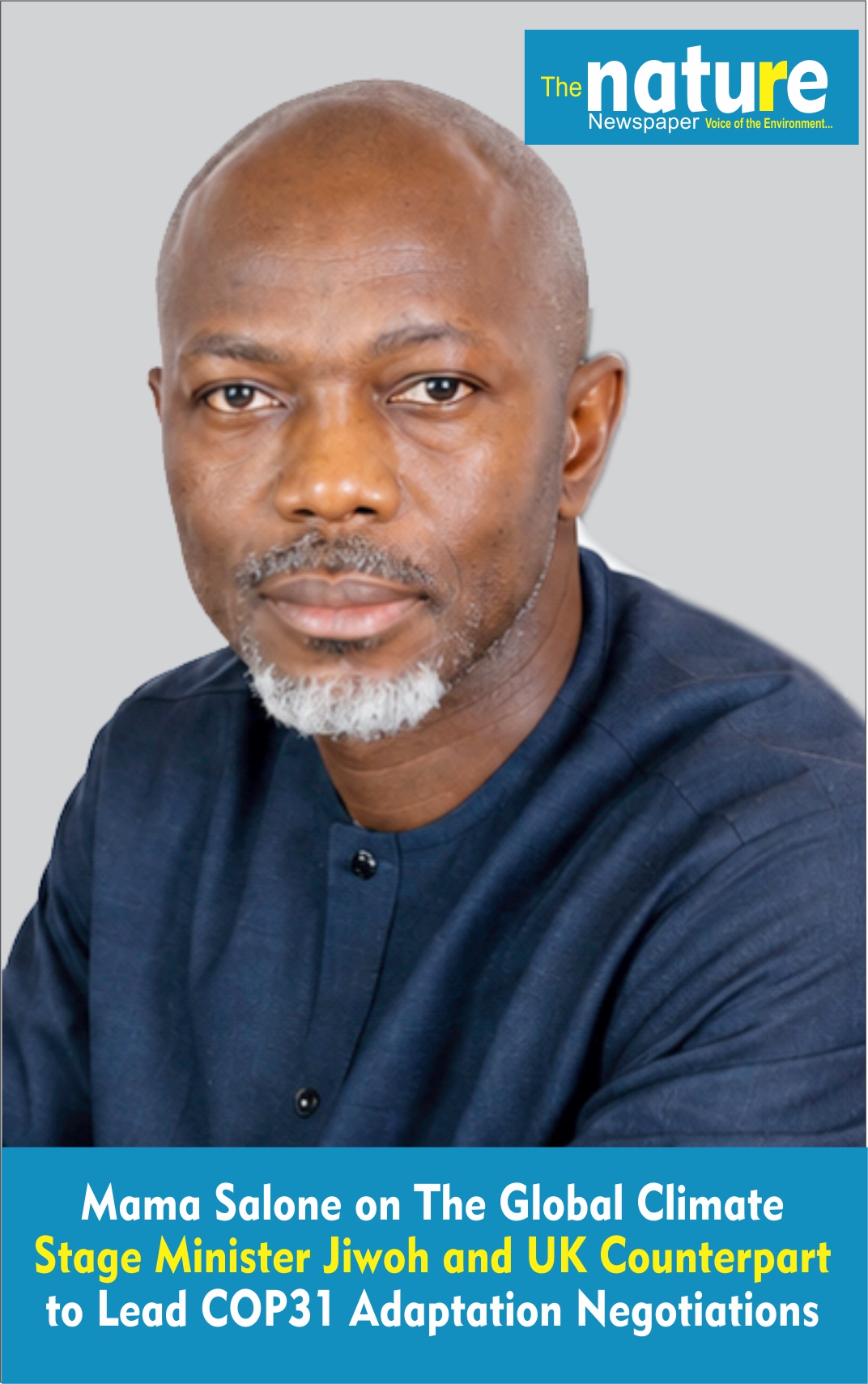
A landmark opportunity for Mama Salone as the country joins the United Kingdom in shaping global responses to climate change Sierra Leone is poised to take a significant step forward in global climate diplomacy following the reported appointment of the Honorable Jiwoh Abdulai, Minister of Environment and Climate Change, alongside the United Kingdom’s Secretary of State for Energy Security and Net Zero, to lead high-level ministerial negotiations on climate adaptation at the 31st United Nations Climate Change Conference (COP31). The appointment, as communicated, represents an important opportunity for Sierra Leone to contribute to international discussions on one of the most urgent challenges facing humanity: how to protect people, livelihoods, economies and ecosystems from the growing impacts of climate change. For a nation where coastal erosion, flooding, changing rainfall patterns, deforestation and pressure on natural resources affect communities and livelihoods, this development carries significance beyond diplomatic recognition. It brings the realities of Sierra Leone’s climate challenges closer to the centre of international decision-making. At a time when vulnerable countries are calling for stronger international cooperation, accessible climate finance and practical adaptation measures, Sierra Leone’s reported role in these negotiations offers a moment of national pride and an opportunity to advocate for solutions that reach the people most exposed to climate risks. Climate diplomacy can sometimes appear distant from everyday life.
Yet the decisions reached at international climate conferences can influence the resources, partnerships and policies available to countries working to protect their people from environmental hazards. In Sierra Leone, climate change is not simply a matter of scientific projections or international policy discussions. It is a lived reality for families in flood-prone communities, farmers, whose harvests depend on increasingly unpredictable rainfall, fishing communities exposed to coastal changes, and households struggling with the consequences of environmental degradation. When heavy rainfall overwhelms drainage systems, families can lose their belongings, businesses can be disrupted and children’s education can suffer. When coastal erosion threatens settlements and infrastructure, communities face uncertainty about their homes and livelihoods. When changing weather patterns affect agricultural production, the consequences can extend to food security, household incomes and the national economy. These realities explain why climate adaptation must remain a central priority for Sierra Leone. The reported appointment of Minister Abdulai creates an opportunity for the country’s experience and priorities to inform high-level discussions about how nations can prepare for climate impacts, strengthen resilience and secure the support required to implement practical solutions. For ordinary Sierra Leoneans, the ultimate measure of success will not be the prominence of an appointment alone, but whether international cooperation helps produce safer communities, more resilient livelihoods and a healthier environment.
COP31 is scheduled to take place from 9 to 20 November 2026 in Antalya, Türkiye. The conference will bring together governments, negotiators, scientists, development partners, businesses and civil society organizations to advance international climate action. Its priorities include adaptation and resilience, climate finance, emissions reduction and the implementation of existing climate commitments. The United Nations Framework Convention on Climate Change identifies adaptation to impacts such as droughts and floods as a central part of the COP process. The wider objective is to move beyond commitments towards practical climate solutions that protect people and economies. For Sierra Leone, this agenda is directly relevant to national development. Stronger adaptation measures could help improve flood preparedness, strengthen early-warning systems, support climate-smart agriculture, restore degraded landscapes, protect mangrove ecosystems and improve the resilience of infrastructure. They could also help communities access better climate information and develop the capacity to anticipate and respond to environmental emergencies. However, such measures require resources. Developing countries need appropriate technology, technical expertise, institutional capacity and reliable financing to translate climate plans into action.
A shared opportunity for Sierra Leone and the United Kingdom The reported joint leadership arrangement with the United Kingdom offers an opportunity to strengthen dialogue between two countries with different economic circumstances but a shared interest in advancing international climate action. The United Kingdom has an important role in international climate diplomacy, climate finance discussions and cooperation on energy transition. Sierra Leone brings the perspective of a climate-vulnerable country seeking to strengthen resilience, protect natural resources and advance sustainable development. Working together, the two countries have an opportunity to encourage constructive dialogue on adaptation priorities, implementation challenges and the support required by vulnerable nations. The significance of such cooperation will depend on the substance of the negotiations, the willingness of participating countries to work towards common ground and the extent to which resulting commitments can be translated into practical outcomes. For Sierra Leone, the opportunity should be used to strengthen international partnerships while maintaining a clear focus on national priorities and the needs of its people.