By Abass Mahmoud Sillah Jr
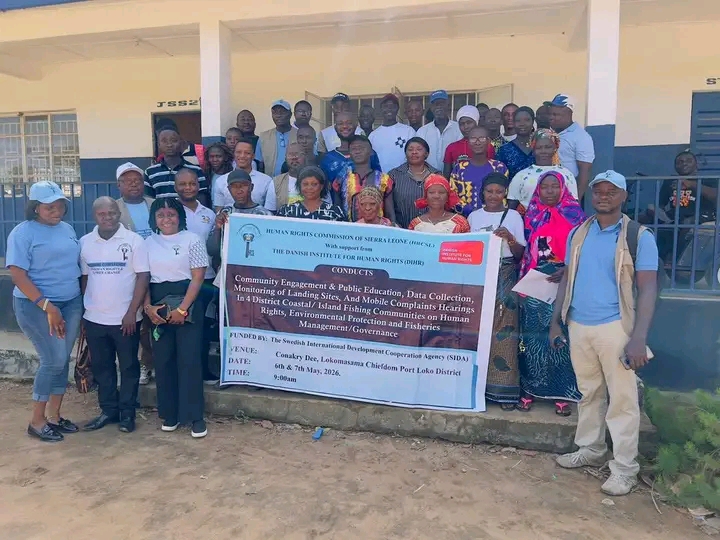
The Human Rights Commission of Sierra Leone (HRCSL), through its Directorate of Climate Change and Information Services, has continued its nationwide engagements with coastal communities aimed at promoting human rights-based marine governance and environmental protection. The latest engagement was held this week in Konakry-Dee, Lungi, Port Loko District, where fishermen, fish mongers, the harbour master, local authorities, and other community stakeholders gathered to discuss challenges affecting livelihoods, marine resources, and the protection of human rights within the fishing sector.
Speaking during the session, Chairperson of the HRCSL, Patricia Narsu Ndanema, said the engagement was intended to create a platform for coastal communities to actively participate in discussions surrounding marine operations, environmental governance, and sustainable natural resource management. She emphasized that the Commission remains committed to documenting concerns raised by fishing communities and advocating for the protection of the rights of people whose livelihoods depend heavily on marine and coastal resources. According to Mrs. Ndanema, strengthening a human rights-based approach to fisheries management is essential in ensuring environmental sustainability, economic security, and social justice for vulnerable coastal populations.
During the interactive discussions, participants highlighted a number of longstanding concerns affecting their livelihoods and safety at sea. Fishermen complained about the destruction of fishing nets and boats by industrial trawlers and transfer vessels, often without compensation or accountability from the companies involved. Community members also reported incidents of intimidation, verbal abuse, and violence allegedly perpetrated against local fishermen during encounters at sea. Environmental degradation emerged as another major issue during the engagement. Residents raised alarm over ongoing sand mining activities, which they said are negatively affecting farming activities, particularly onion plantations, through soil degradation and increased tidal impact on agricultural lands.
Participants further expressed concern over the destruction of mangrove forests, describing it as a growing environmental threat with serious implications for coastal protection, fish breeding habitats, and climate resilience. They called for stricter local regulations and enforcement measures to prevent indiscriminate cutting of mangroves within the community. Fishermen also reported declining fish catches in recent years, attributing the situation to overfishing, industrial fishing activities, and environmental changes. The lack of adequate cold storage facilities was another major concern raised, with community members noting that poor fish preservation continues to reduce household incomes and worsen economic hardship.
Some participants additionally criticized what they described as limited accountability and engagement by certain companies operating within the area, calling for stronger oversight and more transparent relationships between communities and private operators. The community members also strongly condemned the government’s annual closure of the sea to fishing activities every February, arguing that the policy negatively affects fishing communities that rely almost entirely on daily catches for survival. While acknowledging the importance of the temporary fishing ban as a marine conservation measure, participants suggested that the closure period would be more suitable in July or August, when the economic impact on local fishermen may be less severe.
They further appealed to the government to provide alternative livelihood support or social protection measures during the closure period. Speaking at the event, Police Officer Martin Gborie and other local leaders underscored the importance of continued public sensitization, community dialogue, and stronger collaboration among stakeholders to address the mounting environmental and socio-economic challenges facing coastal communities. The engagement forms part of HRCSL’s broader efforts to strengthen community participation in environmental governance while ensuring that the rights and welfare of coastal populations remain central to national discussions on marine conservation and sustainable development.