By Abass Mahmoud Sillah Jr
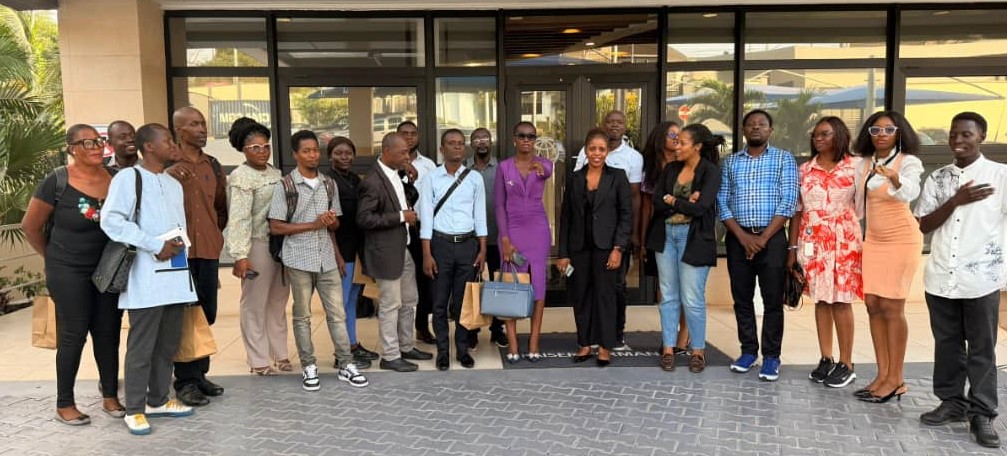
Freetown, Sierra Leone A World Bank consultant, Amira Hallaby, has underscored the importance of adopting a circular economy approach as a sustainable solution to the growing challenges of plastic pollution and waste management. Speaking during a stakeholder engagement session in Freetown, Hallaby highlighted three critical concepts shaping modern waste governance: circular economy, waste management, and extended producer responsibility. She engaged participants in an interactive discussion, inviting them to define the concept of a circular economy.
Contributions from participants emphasized recycling, waste reduction at the production stage, and the sustainable use of resources. Affirming these views, Hallaby explained that a circular economy is a system in which resources are used efficiently through reuse, repair, remanufacturing, recycling, and sustainable design. Unlike the traditional “take–make–dispose” model, a circular system ensures that materials remain in use for as long as possible, thereby minimizing waste and environmental impact.
She stressed that one of the core principles of a circular economy is designing products to eliminate waste and pollution from the outset. According to her, every product—from plastic bottles to mobile phones—should be designed to last longer, be repairable, and remain in circulation. Hallaby pointed to modern electronic devices as an example, explaining that many are not designed for repair, forcing consumers to replace entire products when minor faults occur. She called for a shift toward designs that make components accessible, affordable, and easy to fix.
Describing plastic pollution as a global crisis, Hallaby emphasized that the issue extends far beyond Freetown and requires coordinated international and local responses. Using a plastic bottle as an illustration, she explained how a single product can contain multiple types of plastic, making recycling more complex and less efficient. She further noted that while a significant portion of plastic waste originates from the Freetown Peninsula, a considerable amount also comes from other districts, highlighting the nationwide scale of the problem.
In addition to plastic pollution, Hallaby referenced findings from an upcoming study on sand mining, noting its environmental implications, particularly for coastal ecosystems and tourism. Although sand usage in Sierra Leone remains below global averages, she warned that its impact is disproportionately high due to the country’s reliance on coastal resources. She added that key beneficiaries of sand mining include truck owners and drivers within the supply chain, pointing to the economic dimensions of environmental degradation.
As part of efforts to promote sustainability, Hallaby disclosed that the Ministry of Tourism and Cultural Affairs in Sierra Leone has designated February each year as “Go Circular Month” since 2024. The initiative aims to raise awareness and encourage responsible consumption and production patterns. However, she noted that this year’s activities were rescheduled to April due to the observance of Ramadan. Hallaby acknowledged that while progress has been made in generating data and awareness around circular economy and waste management, significant gaps remain.
She emphasized the need for more data, deeper research, and stronger investigation to better understand the link between human behaviour, policy frameworks, and private sector engagement. She called for stronger collaboration among government institutions, private sector actors, and civil society organizations to develop evidence-based solutions. The session concluded with a call to action for stakeholders to embrace circular economy principles as a pathway to sustainable development. Hallaby stressed that addressing plastic pollution and waste management challenges requires not only policy reforms but also a fundamental shift in production systems and consumer behaviour.