By Abass Mahmoud Sillah Jr
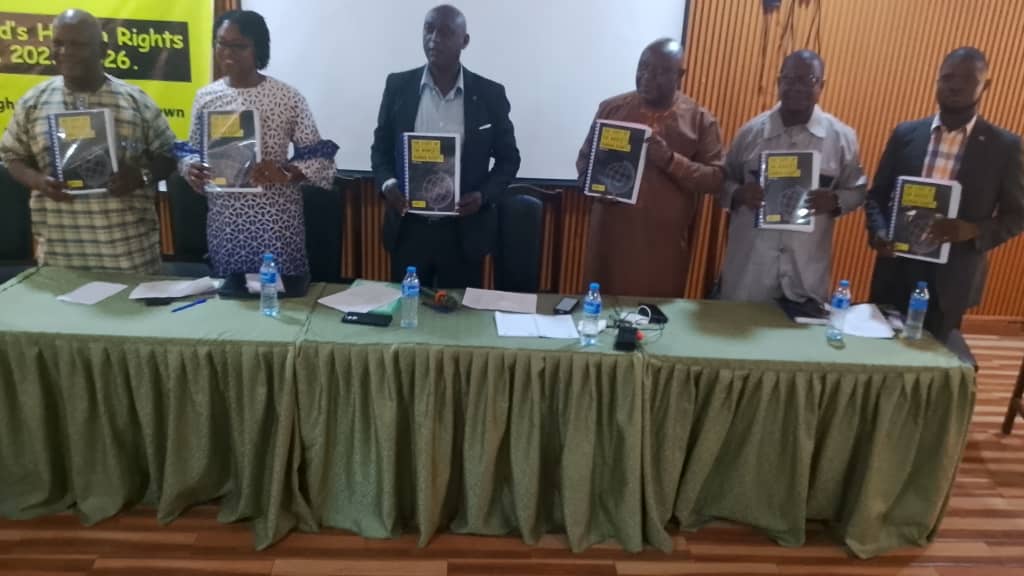
The Executive Director of Amnesty International Sierra Leone, Solomon M. Sogbandi, has presented a comprehensive overview of the country’s human rights landscape, warning that while legal frameworks exist, weak institutional capacity and enforcement gaps continue to undermine meaningful progress. Delivering an assessment aligned with Amnesty International’s 2025 outlook, Sogbandi emphasized that Sierra Leone’s challenges are not rooted in the absence of laws, but rather in systemic weaknesses, entrenched inequality, and limited accountability mechanisms.
Sogbandi identified freedom of expression and digital governance as a primary concern. Although constitutionally guaranteed, he noted that this right is increasingly constrained in practice through policing methods and regulatory frameworks governing online communication. According to international human rights reports, there are ongoing concerns about the intimidation of journalists, restrictions on peaceful assembly, and the disproportionate use of law enforcement against critics of the state.
He pointed to ambiguities in cybersecurity and communication laws—particularly provisions related to “misinformation” and “insult”—as enabling selective enforcement. “These broad legal interpretations create room for overreach,” he said, adding that the absence of strong oversight mechanisms contributes to a growing climate of fear and self-censorship. This, he warned, weakens democratic participation and undermines accountability. Turning to the right to health, Sogbandi described Sierra Leone’s healthcare system as structurally fragile. Despite post-conflict and post-epidemic reconstruction efforts, the country continues to face a severe shortage of skilled health professionals, especially in specialized fields like surgery and emergency care.
Rural communities remain disproportionately affected, with limited access to essential services. Maternal health remains a pressing issue, with high mortality rates linked to inadequate emergency obstetric care, a shortage of trained birth attendants, and weak referral systems. While international donor support has improved vaccination coverage and reproductive health services, Sogbandi warned that heavy reliance on external funding raises serious concerns about sustainability and national ownership. “The ambition for universal health coverage is commendable,” he noted, “but implementation is constrained by limited fiscal space and fragmented service delivery.”
The report also underscores the growing crisis around the right to food. Sogbandi highlighted the intersection of poverty, climate vulnerability, and dependence on subsistence agriculture as key drivers of food insecurity. Erratic rainfall, flooding, and rising global food prices are compounding the problem, reducing access for already vulnerable populations. He stressed that food insecurity in Sierra Leone must be viewed not only as an economic issue but also as one of environmental justice and global inequality. One of the most urgent concerns raised was the rapid rise in drug abuse among young people, particularly involving a substance locally known as “kush.”
Sogbandi described the situation as a growing public health emergency with far-reaching consequences for both physical and mental health. He attributed the crisis to a combination of structural unemployment, social exclusion, and weak regulatory enforcement, calling for urgent, coordinated national interventions. Environmental challenges also featured prominently in the assessment. Deforestation, unsustainable fishing practices, and weak environmental governance are contributing to land degradation and loss of livelihoods.
With an estimated two-thirds of the population exposed to environmental risks, climate change is further intensifying vulnerabilities through coastal erosion, erratic weather patterns, and increased disaster risk. “These environmental threats are not isolated—they directly impact health, food security, housing, and economic stability,” Sogbandi explained. In conclusion, Sogbandi described Sierra Leone’s human rights situation as one of “formal progress but substantive fragility.”
While legislative frameworks in areas such as health, gender equality, and environmental protection show advancement, their real-world impact remains limited. He called for a shift from mere compliance with international norms to sustained investment in institutional capacity, equitable service delivery, and inclusive governance. “The central challenge is not legal recognition of rights,” he concluded, “but the political will and institutional strength to realize them.”