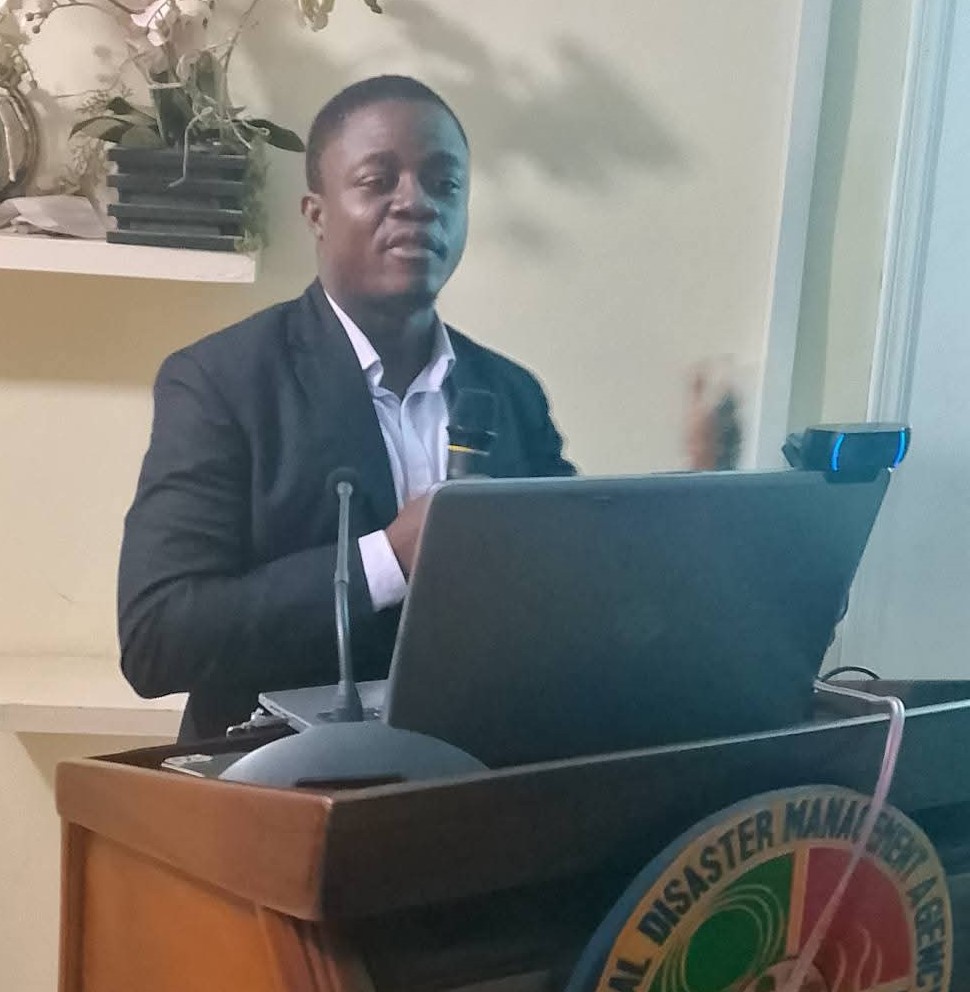
The Deputy Director General of the Sierra Leone Meteorological Agency (SLMet), Mr. Gabriel Kpaka, has warned that the ongoing dry season and projected climate conditions pose serious risks to key national sectors, including agriculture, water resources, public health, transport, energy, and livelihoods. Mr. Kpaka made the statement while presenting sector-specific climate risk assessments and recommendations during a national disaster coordination meeting. According to him, agriculture and food security are among the most vulnerable sectors, as rain-fed farming systems are expected to suffer under prolonged dry spells and drought conditions.
“There will be an extended dry spell, which means drought. Rain-fed agriculture will be affected, leading to crop water stress, land degradation, and reduced yields,” he said. He explained that insufficient rainfall would negatively affect soil moisture levels, limiting crop growth and threatening food production, especially for smallholder farmers who depend entirely on rainfall. Turning to water resources, Mr. Kpaka identified reduced river flows and weak groundwater recharge as the primary risk drivers during the dry season. “We are already observing lower river flows. Wells that used to provide water are now drying up, and groundwater recharge is becoming weaker,” he noted.
He warned that the situation could escalate as irrigation demand increases, placing additional pressure on already strained water systems. “These conditions will affect irrigation and domestic water supply, and the impacts will be felt across communities,” he said, referencing ongoing challenges already being experienced in several areas. The health sector, he noted, is also at heightened risk due to increased dust concentration, high temperatures, and water scarcity. Mr. Kpaka explained that fine particulate matter, particularly PM2.5, poses serious respiratory risks when inhaled.
“These particles affect the respiratory system and cause eye irritation, while high temperatures increase the risk of heat stress, especially among the elderly and vulnerable populations,” he said. He disclosed that SLMet has begun issuing temperature-focused forecasts in addition to standard weather updates, to better inform the public about heat-related risks. In the transport and aviation sectors, Mr. Kpaka warned that dust, haze, and fog significantly reduce visibility, posing dangers to both air and road travel. “No pilot can land safely when visibility is poor. Dust and haze affect aviation operations, while reduced visibility also increases the risk of road accidents,” he stated.
He added that marine transport is equally affected, particularly during early morning hours when fog is most intense. “For maritime operators, fog and haze reduce visibility at sea, making navigation dangerous,” he said. Mr. Kpaka also noted that SLMet is often invited to provide expert testimony in maritime disputes, where weather conditions are sometimes cited as contributing factors in sea incidents. “In some cases, weather is blamed, but not all incidents are weather-related. Our role is to provide objective scientific advice,” he clarified. The energy sector is also expected to face challenges, largely due to increased temperatures driving higher cooling demand.
“When temperatures rise, cooling demand increases. Generators and other systems require more cooling, which adds pressure to energy supply,” he explained. He further warned that environmental degradation and livelihoods will be affected by prolonged dry spells, particularly in rural communities dependent on natural resources. To address these risks, Mr. Kpaka outlined a series of recommendations, beginning with strengthening monitoring and early warning systems. “We urge the public and institutions to pay attention to the information we issue. If you do not understand it, tell us so we can explain,” he said.
He disclosed that SLMet’s services are audited globally under WMO monitoring mechanisms, ensuring international standards and accountability. As part of its enhanced communication strategy, SLMet has introduced decadal climate bulletins, issued every ten days, providing updates on temperature, wind, dust, and other climate parameters. “These bulletins will help people understand what to expect over the next ten days,” he explained. Mr. Kpaka said the agency disseminates information through Facebook, WhatsApp groups, and other communication channels to reach a wider audience. For the agriculture sector, he recommended promoting short-cycle and drought-tolerant crops, adjusting planting dates, and scaling up small-scale irrigation systems.
“We also advise farmers to protect livestock and follow guidance issued by the Ministry of Agriculture,” he said. On water resource management, he called for contingency planning, regular reservoir checks, and regulated water discharge to avoid wastage during periods of scarcity. “You do not just release all the water and lose everything. Water must be managed strategically,” he cautioned. In the area of public health and community safety, Mr. Kpaka said SLMet will issue dust and heat advisories, encouraging the public to take protective measures.
For transport and aviation, he confirmed that notices would be issued to airports and ferry operators, alongside daily marine forecasts. However, he acknowledged a persistent challenge: limited public understanding of meteorological information. “One of the major gaps is that many end users do not fully understand the information we provide,” he admitted. He concluded by calling for stronger collaboration between scientists, institutions, and the public to ensure climate information is effectively used to protect lives and livelihoods.
By Abass Mahmoud Sillah Jr