By: The Nature Newspaper
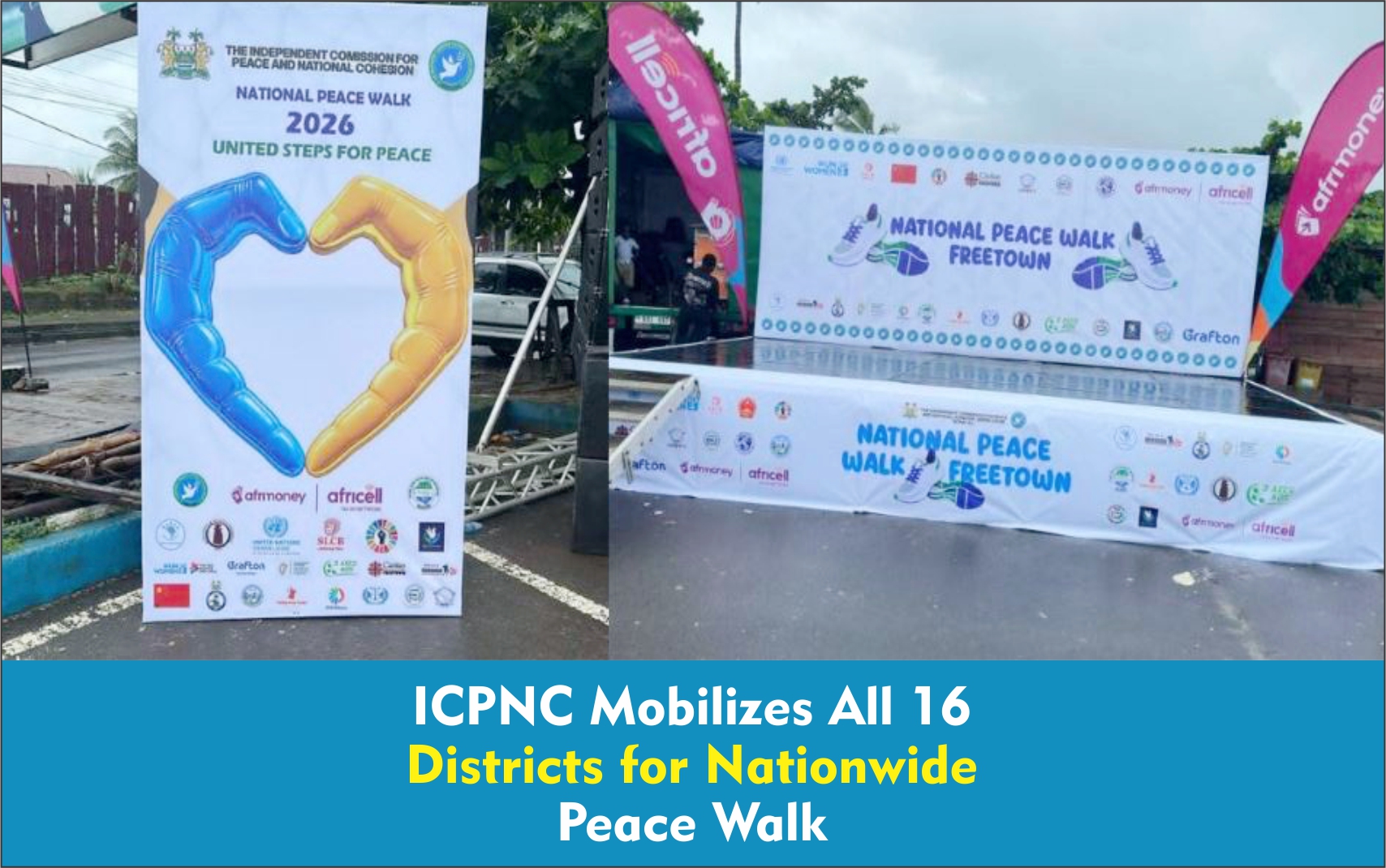
The Independent Commission for Peace and National Cohesion (ICPNC), in collaboration with its partners, mobilised communities across all 16 districts of Sierra Leone on Saturday, September 19, 2026, for a nationwide Peace Walk aimed at promoting peace, unity, reconciliation and national cohesion. The nationwide exercise, held as part of activities commemorating the International Day of Peace, brought together citizens from different communities and backgrounds under a common message of peaceful coexistence and shared responsibility for sustaining Sierra Leone’s peace. The initiative was held under the theme “Invest in Peace and Unity: For Everyone, Everywhere, Every Day,” with the rallying message “Together in Peace, United as One.” Across the country, citizens participated in simultaneous peace-walking activities, turning the event into a nationwide demonstration of solidarity. Reports indicated participation in districts including Bo, Kenema, Makeni, Kono, Moyamba, Bonthe and communities in the North-West, alongside the activities organised in Freetown. In the capital, participants assembled at different locations before embarking on a coordinated procession through major streets of Freetown. Participants from the eastern part of the city gathered at Up-Gun Roundabout on Kissy Road, while those from the western part assembled at the Cotton Tree. The groups subsequently took part in the peace walk and float parade through parts of the capital before converging at Kallon Car Park at Lumley Beach, where the national activities continued. The procession brought together representatives of the security forces, peace advocates, community stakeholders and members of the public.
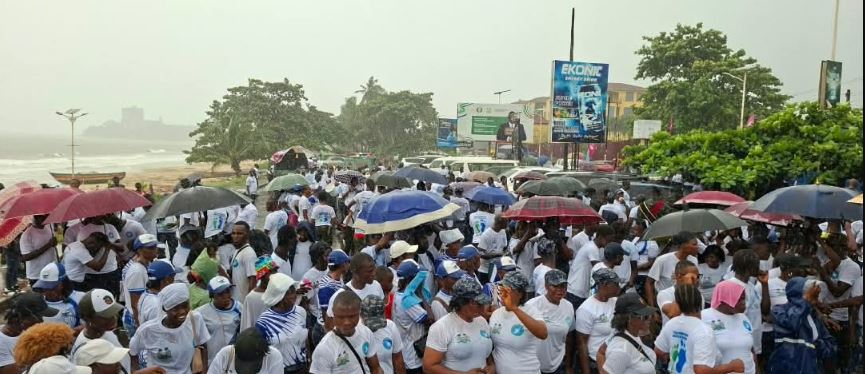
The Sierra Leone Police Community Relations Department participated in the procession, supported by the Police Brass Band and public-address facilities. Peace Ambassador Abubakarr Turay, popularly known as Shaddy Baby, also took part in the event. Despite rainfall in parts of Freetown, participants continued with the activities, with the procession eventually culminating around Lumley Beach. Beyond Freetown, the Peace Walk extended to communities across all 16 districts, reinforcing the organisers’ intention to make the event a national rather than a capital-city initiative. Citizens participated in street processions, community gatherings and related activities, with participants commonly wearing white as a symbol associated with peace and neutrality. The nationwide mobilisation demonstrated the extensive network through which the ICPNC engages communities. The Commission maintains regional offices and works with traditional and religious leaders, women and youth groups, civil society organisations, local councils and community stakeholders on dialogue, conflict prevention, reconciliation and peacebuilding. The ICPNC used the occasion to emphasize that peacebuilding cannot be left solely to institutions responsible for peace and security. The Commission has consistently promoted the idea that citizens, communities and national institutions all have roles to play in preventing conflict, resolving differences peacefully and strengthening social cohesion.
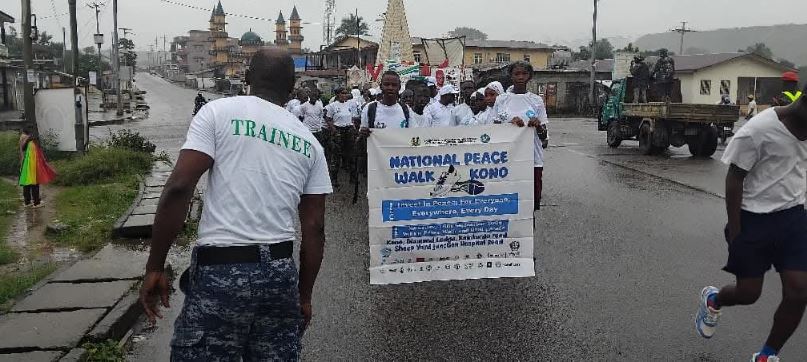
The Peace Walk therefore served not only as a public commemoration of the International Day of Peace, but also as an opportunity to remind citizens that maintaining peace requires continuous engagement. The Commission’s Executive Secretary, Hawa Sally Samai, has emphasised that peace must begin in homes and communities and that citizens have a role in protecting the peace of Sierra Leone. The participation of people from different parts of the country gave the initiative a strong community dimension. From the south to the east, north and north-west, communities joined the national exercise, creating a common platform through which citizens could express support for peace and national cohesion. In Bo, participants reportedly gathered at Coronation Field before marching through Mahei Boima Road. Similar activities were reported in Kenema, Makeni, Kono, Bonthe, Moyamba and other parts of the country. The event also provided an opportunity for young people, women, religious and traditional leaders, civil society organizations, political actors, schools, community groups, the media and persons with disabilities to participate in a shared national activity. For the ICPNC, the Peace Walk was intended to go beyond a single day’s procession. The Commission has described peacebuilding as a continuous process requiring dialogue, reconciliation, conflict prevention and cooperation at community and national levels. Its mandate includes measures to prevent, manage and resolve conflicts while promoting sustainable peace across Sierra Leone.
The Commission has also established Peace CSO Coalitions across all 16 districts, while peace mediators have been trained to support alternative approaches to conflict resolution at community level. These structures provide a foundation for continuing the message of the Peace Walk beyond September 19. A national call for unity the 2026 National Peace Walk came at a significant moment in Sierra Leone’s continuing efforts to strengthen national cohesion. By bringing communities from all 16 districts together around a single peace message, the ICPNC sought to highlight the importance of dialogue, tolerance, reconciliation and peaceful coexistence. The event also reinforced the principle that peace is not simply the absence of conflict, but a shared national responsibility that requires participation from citizens, communities, institutions and leaders. As the final participants completed the walk in Freetown and across the districts, the central message remained consistent: Sierra Leone’s peace must be protected and strengthened through collective action. The National Peace Walk 2026 therefore concluded not merely as a one-day event, but as a nationwide reminder that sustaining peace requires everyday commitment from individuals and families to communities and national institutions. Under the message “Together in Peace, United as One,” Sierra Leoneans across all 16 districts walked as part of a common national expression of peace, unity and reconciliation.