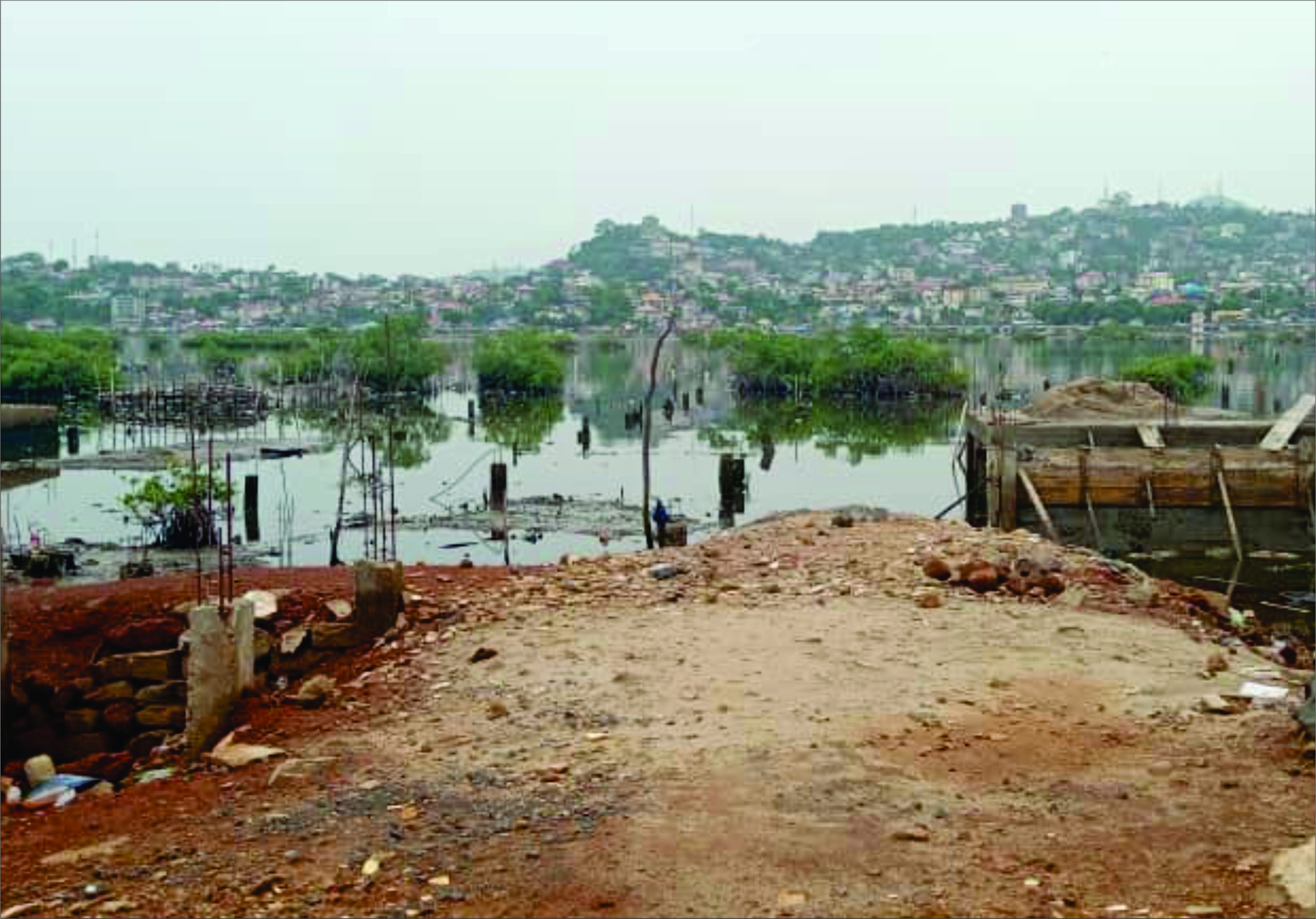
The Western Area is currently standing at a perilous environmental crossroads. Recent reports indicating that nearly 90% of forest reserve lands and wetlands have been partitioned and sold for settlement development have sent shockwaves through the ranks of climate advocates and civil society. What was once a lush, protective “Greenbelt” is rapidly being converted into a concrete jungle, a move experts warn is not “development,” but an environmental time bomb. While the Ministry of Lands, Housing, and Country Planning (MLHCP) is officially mandated to ensure “sustainable management and optimal utilization” of land resources, a stark disconnect has emerged between policy and the reality on the ground.
The Ministry’s stated vision is to integrate environmental management into housing construction. However, investigations have uncovered a darker narrative. Reports suggest that some officials have not only been “reluctant to act robustly” against encroachment but have actively facilitated the illegal sale of state land within protected zones for personal gain. In some instances, hundreds of documents were allegedly signed to grant leases in flagrant violation of the law, turning a blind eye to the destruction of the very ecosystems the Ministry is sworn to protect. The Western Area’s natural ecosystems are essential for human survival.
If the current trend of selling our “Greenbelt” for short-term construction continues, we are not just building houses; we are building a future of disaster for the next generation. The destruction of these zones isn’t just a loss of scenery; it’s a removal of our primary defense systems as Wetlands act as natural sponges, absorbing excess rainwater and slowing floodwaters when replaced by roads and buildings, rainwater has nowhere to go, drastically increasing the risk of flash floods. In mountainous areas, tree roots hold the soil together. Clearing these forests for mansions leaves the soil loose and unstable, the consequences of poor urbanization are dire.
According to the National Disaster Management Agency (NDMA), over 20,000 people were displaced by floods and mudslides in the past years alone, with more than 2,000 lives lost. Informal settlements continue to spring up in environmentally sensitive areas, hillsides, riverbanks, and mangrove swamps, making the capital city a ticking time bomb during the rainy season. At the heart of this crisis is the alleged negligence and inefficiency of the Ministry of Lands, Housing and Country Planning. Perhaps the most terrifying consequence of selling off the Greenbelt is the threat to the water supply. Forest reserves protect the water catchment areas that feed the city’s reservoirs.
Deforestation in these parks is already being cited as a precursor to a looming “water shortage crisis” for Freetown residents. As wetlands, the earth’s natural filters disappear, the remaining water becomes increasingly susceptible to pollutants. The environmental decay translates directly into a health crisis, Wetland destruction leads to poor drainage and stagnant water, creating perfect breeding grounds for mosquitoes and increasing the spread of malaria. Flooding consistently triggers outbreaks of cholera and typhoid, While the sale of protected lands may offer “short-term financial gains” for a few individuals, the long-term cost to the nation is astronomical.
The government and local communities stand to lose billions of leones in disaster response, infrastructure repair, and healthcare costs. To avert this catastrophe, a shift from “weak governance” to “strong enforcement” is non-negotiable. There must be an immediate probe into the allocation of protected lands. Degraded areas must be restored to their natural state. Urban development must strictly adhere to sustainability principles rather than individual profit.