By Abass Mahmoud Sillah Jr
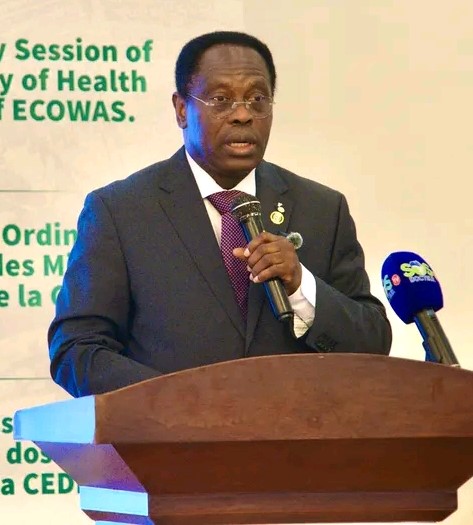
The Director-General of the West African Health Organization, Dr. Melchior Athanase J.C. Asissi, has called for stronger regional cooperation and sustained political commitment to eliminate malaria and other cross-border diseases across West Africa within the next decade. Addressing a high-level gathering of health ministers, parliamentarians, and development partners, Dr. Asissi underscored a fundamental reality of global health: no country can tackle infectious diseases in isolation. “No state, I say no state, can single-handedly limit the spread of disease,” he said. “Diseases do not respect borders. This is why an integrated regional approach—grounded in solidarity, coordinated interventions, data sharing, innovation, and long-term resource mobilization—is essential.”
He noted that West Africa’s high population mobility, including significant inflows of tourists and cross-border movements, increases vulnerability to the spread of infectious diseases, further reinforcing the need for collective action. Dr. Asissi emphasized that achieving disease elimination, particularly malaria, will depend on aligning political will with technical expertise and sustained collaboration among member states of the Economic Community of West African States (ECOWAS). “We must act together, remain united in purpose, and place health at the center of our development agenda,” he urged. “Only through political commitment, technical solidarity, and collective engagement can we reach our shared goals.”
The WAHO Director-General outlined several priority areas to strengthen regional health systems and accelerate progress toward malaria elimination, including improved governance and coordination, enhanced data systems and digitalization, stronger disease surveillance, and greater investment in research and local innovation. He also highlighted the importance of integrating community-level responses into national health strategies and mobilizing sustainable domestic and international resources. He reaffirmed WAHO’s commitment to supporting member states in implementing strategic health plans, improving coordination, and ensuring effective use of technical and financial resources.
Dr. Asissi further highlighted a bold regional ambition to eliminate malaria within the ECOWAS region over the next ten years, describing it as achievable but dependent on sustained effort and cooperation. “This ambition is within reach if we maintain momentum, act collectively, and ensure that health remains a top priority,” he said. He also referenced ongoing efforts to strengthen national and community health systems, including the development and adoption of community health policies across member states, in line with ministerial recommendations agreed in recent regional meetings. According to Dr. Asissi, WAHO’s forthcoming annual report will provide a comprehensive overview of achievements, persistent challenges, and strategic priorities for the years ahead.
Key focus areas include improving transparency in the use of health funds, strengthening supply chains for essential medicines, and expanding community-based healthcare delivery. He acknowledged the critical role of partners, experts, and stakeholders in advancing regional health initiatives and called for continued collaboration to build resilient health systems capable of responding to emerging threats. In his closing remarks, Dr. Asissi expressed deep appreciation to member states, partners, and colleagues for their support throughout his tenure, noting that the organization has laid a solid foundation for a more integrated and resilient regional health system.
“I am grateful for the trust, collaboration, and shared commitment that have defined our work over the years,” he said. “Together, we have strengthened the foundations of regional health cooperation, and I am confident that even greater progress lies ahead.” He pledged continued support during the leadership transition and expressed confidence in his successor’s ability to build on existing gains.