By Abass Mahmoud Sillah Jr
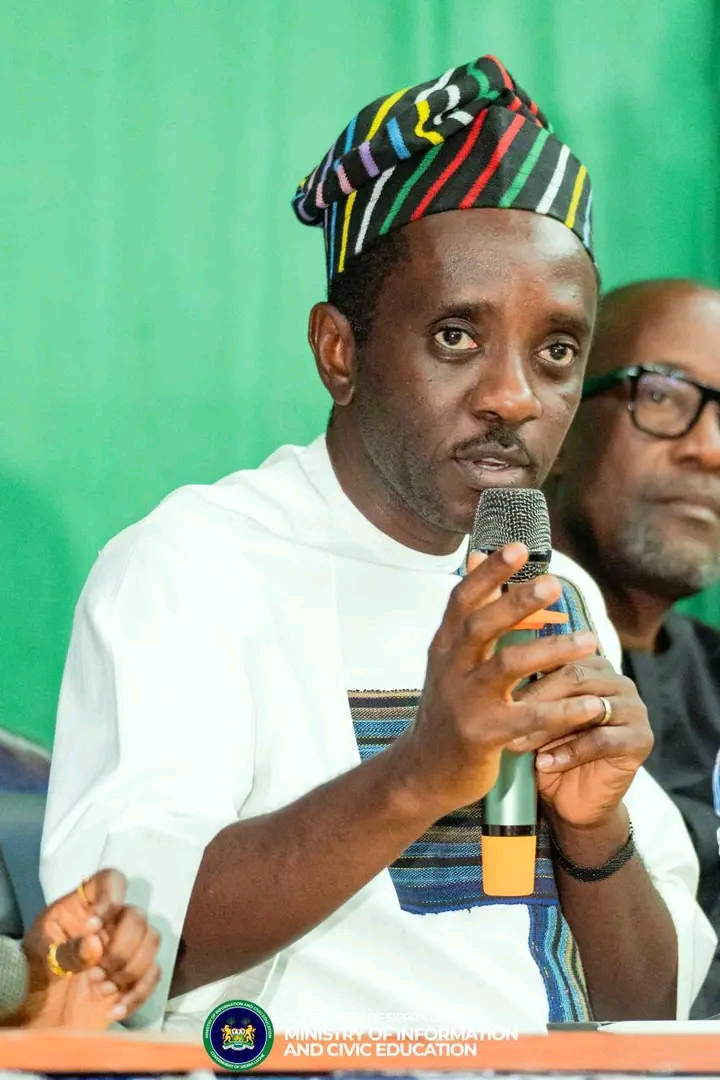
The Minister of Information and Civic Education, Chernor C. Bah, has outlined a series of major policy decisions approved by Cabinet, targeting reforms across critical sectors including energy, foreign service, education, aviation, and digital finance. Speaking at a government briefing, Minister Bah emphasized the importance of leveraging both international partnerships and regional expertise through South-South cooperation to drive national development. He noted that strategic collaboration in sectors such as mining and energy is expected to improve electricity supply, reduce energy costs, and support industrial growth.
Among the key approvals is an updated Foreign Service Bill, which will be submitted to Parliament. The proposed legislation seeks to strengthen accountability in Sierra Leone’s overseas missions and align financial management practices with national public finance laws. The bill is also expected to enhance transparency and efficiency in the country’s foreign engagements. Cabinet also approved a memorandum from the Ministry of Foreign Affairs calling for the realignment and expansion of Sierra Leone’s diplomatic missions.
This includes the establishment of new missions in countries such as Ireland and France, as well as the restructuring of existing ones to broaden their areas of coverage and improve service delivery. In the aviation sector, Cabinet endorsed the Sierra Leone Airport Authority Bill, designed to modernize the country’s aviation framework. The proposed law will introduce updated standards in safety, governance, and private sector participation, reflecting global best practices. Officials say the reform will reposition the airport authority to operate more efficiently within a competitive environment.
Significant developments were also recorded in the energy sector, with Cabinet approving a special concession agreement with Aminata and Sons Limited. The agreement will support the development of fuel storage infrastructure and expand petroleum distribution nationwide. Authorities believe this will stabilize fuel supply, reduce shortages, and encourage competition by increasing the number of service providers in the market. Minister Bah highlighted that the entry of new players into the petroleum sector is already improving service delivery and helping to cushion the impact of global fuel supply disruptions.
Plans to expand national storage capacity are expected to further enhance supply security and price stability. Additionally, Cabinet approved the extension of the ROPSEM agreement, which supports the establishment of large-scale cement grinding plants in Kissy. The initiative is projected to boost local cement production, create jobs, and reduce reliance on imports. In the education sector, Cabinet gave its approval to the revised West African Examinations Council (WAEC) Bill, aimed at strengthening the credibility, integrity, and effectiveness of national examinations at both basic and senior secondary levels.
The President has also called for a broader national dialogue to rethink the entire public examinations system and develop a more robust framework for assessment. To promote transparency and accountability in higher education, Cabinet approved a new digital payment policy mandating that all student fees in public universities be paid electronically. The policy is expected to improve financial management systems and reduce opportunities for fraud and mismanagement.
Furthermore, Cabinet endorsed a national data protection policy, underscoring the government’s commitment to safeguarding personal information and strengthening digital governance frameworks. Minister Bah concluded by reaffirming the government’s commitment to reforms that enhance service delivery, promote economic growth, and strengthen institutional accountability across all sectors.