Trending:
/ Oct 30, 2026

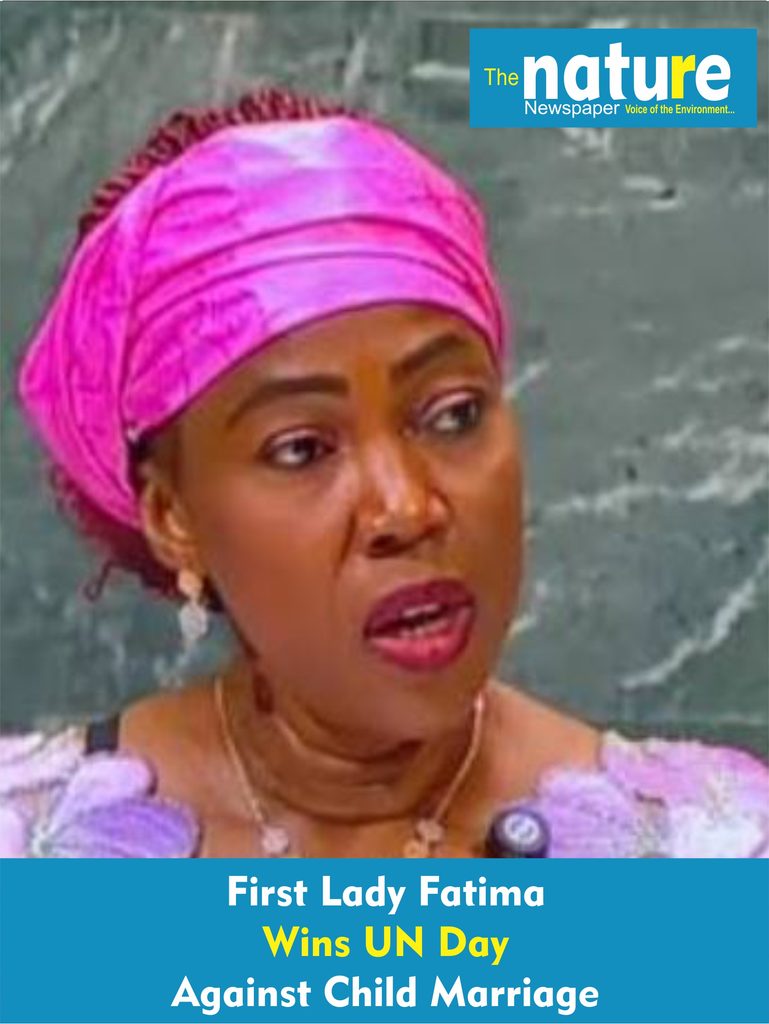
First Lady Fatima Wins UN Day Against Child Marriage
First Lady Dr. Fatima Maada Bio Wins UN Resolution to End Child Marriage Worldwide Sierra Leone leads global push as General Assembly creates annual day of action against child, early and forced marriage The United Nations General Assembly has adopted a resolution establishing an annual International Day for the Elimination of Child, Early and Forced Marriage, to be observed each November 27. The proposal was introduced and pushed through by Sierra Leone’s First Lady, Dr. Fatima Maada Bio a woman who once narrowly escaped a forced marriage herself. The resolution asks member states, international organizations, civil society groups and ordinary citizens to dedicate November 27 every year to awareness campaigns, policy reviews and coordinated action. The logic is simple: keep the issue visible, keep governments accountable, and keep money and attention flowing toward the goal of ending the practice by 2030, which is one of the Sustainable Development Targets. Dr. Bio, who also heads the Organisation of African First Ladies for Development (OAFLAD), presented the draft at UN Headquarters in New York on Thursday. She has called child, early and forced marriage a form of “legalized rape” for years, arguing that it strips girls of schooling, endangers their health and robs their countries of everything they might have contributed. This is not her first win at the UN. In 2022, she helped secure recognition of November 18 as the World Day for the Prevention of and Healing from Child Sexual Exploitation, Abuse and Violence. That earlier victory signaled that Sierra Leone, a small West African nation still carrying the scars of a brutal civil war could reach well beyond its size in international human rights forums. Back home, the First Lady’s “Hands Off Our Girls” campaign built enough public pressure to push the Prohibition of Child Marriage Act through parliament. President Julius Maada Bio signed it into law in 2024. Under the Act, marrying or arranging the marriage of anyone under 18 is now a serious criminal offence carrying lengthy prison terms or heavy fines. The law matters. Before it passed, roughly one in three girls in Sierra Leone was married before turning 18 one of the highest rates in the world. The consequences were not abstract: girls dropped out of school, became pregnant too young, died in childbirth at alarming rates, and stayed poor. The ban and the community outreach that followed have made a real difference, though nobody in Freetown pretends the work is done. Enforcement remains patchy in rural districts, and old social norms do not shift on command. But the numbers tell a story beyond Sierra Leone’s borders. Globally, about 12 million girls are married before 18 every single year. The new International Day is meant to keep that figure from slipping into the background of international diplomacy, where it has too often languished. For Sierra Leoneans, Thursday’s vote in New York carries weight that goes beyond politics. Their First Lady lived what she fights against. During the civil war years, she was nearly forced into marriage as a teenager. She fled, sought asylum in the United Kingdom, and eventually returned not just to survive, but to make sure other girls would not have to repeat her story. That biography gives her advocacy a kind of credibility that no appointment or title can confer. It is one thing for a public figure to denounce child marriage from a podium. It is another when the person at the podium is describing her own life. The Office of the First Lady says the resolution confirms Sierra Leone’s growing role in international efforts to protect girls and young women. A country that once recorded some of the world’s worst child marriage statistics is now helping lead the global fight against it. Dr. Bio has said, plainly and often: “When a girl is protected, a nation is strengthened.” This week, the General Assembly agreed.