By Abass Mahmoud Sillah Jr
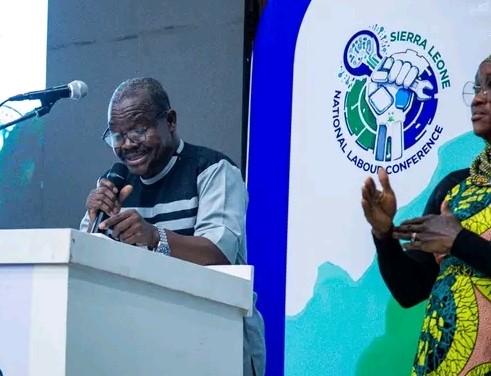
The Deputy Minister of Employment, Labour and Social Security, Lansana Mohamed Dumbuya, has outlined a series of legislative reforms and policy measures aimed at improving workers’ welfare, while acknowledging ongoing challenges in Sierra Leone’s labour sector. Speaking at a labour conference held ahead of International Workers’ Day, Dumbuya highlighted the government’s efforts to strengthen occupational safety and health standards through the ratification and enactment of key conventions into law.
Among the major milestones, he cited the Employment Act 2023, which seeks to enhance both workers’ and employers’ rights, the Work Permit Act 2023 regulating the employment of foreign nationals, and the Overseas Employment and Migrants Act 2023 designed to protect the rights of migrant workers at both national and international levels. The Deputy Minister also pointed to recent economic interventions under the leadership of President Julius Maada Bio, noting that the national minimum wage has been increased twice—from 800 new leones to 1,200 new leones, with the latest adjustment taking effect in April 2026.
He added that pension payments have seen a significant boost, rising from 25 new leones to 250 new leones, although he acknowledged that the amounts remain modest. “In addition, His Excellency has implemented pay reforms benefiting a large segment of public sector workers,” Dumbuya stated, emphasizing government efforts to improve livelihoods. He further disclosed that the Ministry has launched a Decent Work Country Programme aimed at mobilizing resources to create employment opportunities and foster conditions where citizens—particularly vulnerable groups—can work in freedom, safety, and dignity.
Despite these strides, Dumbuya admitted that significant challenges persist. Youth unemployment remains high, and some employers continue to violate labour regulations. He also noted gaps in enforcement and monitoring mechanisms, which hinder effective compliance across sectors. Addressing emerging trends, the Deputy Minister warned of the growing complexities in the digital economy, including job and income insecurity, as well as risks to workers’ privacy and data protection. “As we embrace the digital era, we must confront new realities that affect the quality and security of work,” he said.
The conference, which forms part of activities marking May Day celebrations, brings together key stakeholders from government, employers, and workers’ organizations—the tripartite constituents—to deliberate on strategies for improving labour conditions nationwide. Dumbuya commended participants for their engagement and reiterated the government’s commitment to prioritizing the interests of workers, employers, and the state. “Workers are our priority. Employers are our priority. Government remains the mediator,” he affirmed.
The Deputy Minister concluded by inviting representatives of the Sierra Leone Labour Congress to deliver their statement, describing them as a critical social partner in advancing labour rights, despite occasional disagreements. The event sets the tone for this year’s May Day commemorations, expected to focus on addressing both traditional and emerging challenges in the world of work.