By Abass Mahmoud Sillah Jr
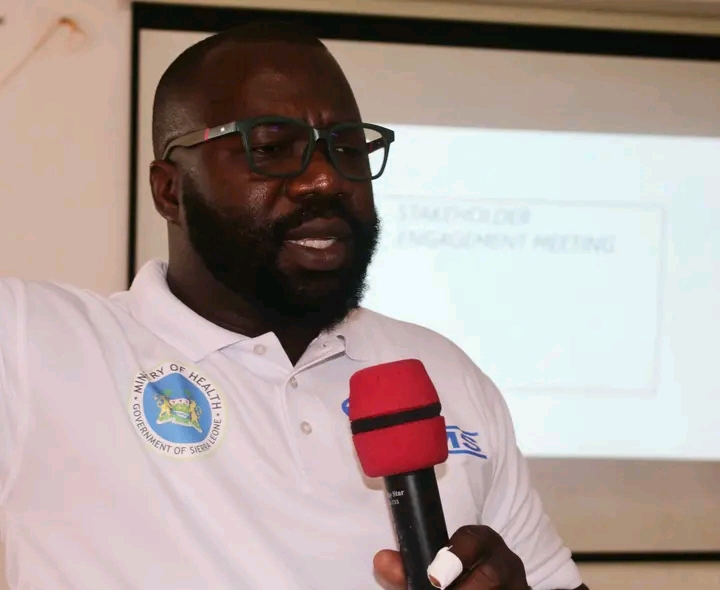
The Chief Executive Officer of the National Emergency Medical Service (NEMS), Dr. Songor Koedoyoma, has warned that rising fuel costs are placing significant pressure on Sierra Leone’s emergency medical response system, even as ongoing reforms begin to improve service delivery nationwide. Speaking in an interview, Dr. Koedoyoma said fluctuations in fuel prices are directly affecting ambulance operations, noting that fixed budgets are increasingly insufficient to sustain nationwide coverage. Using a practical illustration, he explained that a budget of Le500 million can purchase vastly different quantities of fuel depending on market conditions—ultimately determining how long ambulances remain operational.
“At lower fuel prices, we are able to procure significantly more litres to sustain operations. But when prices rise, the same amount of money buys far less, leaving us with a shortfall that directly affects service delivery,” he said. Despite these constraints, Dr. Koedoyoma highlighted significant progress within NEMS following recent leadership and structural reforms. He described the service as a critical arm of the healthcare system, responsible for ensuring that patients are transported safely and promptly to medical facilities. “For me, I always say ‘we’—because I am part of a team,” he said, noting that the reform process is driven by collective leadership under the Ministry of Health.
“The Minister recognised that there were challenges within NEMS and took steps to reposition the service.” The restructuring process, he said, involved close collaboration with senior health officials, including Dr. Kaba, alongside a team of supervisors tasked with strengthening coordination, accountability and operational control. “It has not been easy,” he added. “But with a change in thinking and leadership structure, we have significantly improved our response capacity.” According to Dr. Koedoyoma, the number of emergency interventions carried out in 2025 has already surpassed the combined total recorded in 2022, 2023 and 2024, reflecting improved efficiency and responsiveness across the system.
He stressed, however, that increasing the number of ambulances alone is not enough to guarantee effective service delivery. Instead, he called for a coordinated deployment system that allows ambulances to support one another based on real-time demand. Drawing on the example of Kambia District, he noted that while multiple ambulances may be assigned to a district, their effectiveness depends on how well they are managed and strategically positioned. “If you place just one ambulance in a location and it is engaged elsewhere, that entire community is left without coverage,” he said.
“That is why we must operate a system where ambulances support each other and are deployed based on real-time needs.” He also underscored the importance of maintaining standby units, particularly in high-demand areas, to ensure continuous emergency coverage and reduce response times. In addition to deployment strategies, Dr. Koedoyoma highlighted ongoing efforts to improve ambulance availability through better maintenance practices. He described fuel and routine servicing as the lifeline of the service, stressing that preventive maintenance is key to avoiding costly breakdowns.
“We have prioritised routine maintenance—changing oil, fuel filters and other essential components—to keep ambulances running efficiently,” he said. “If you neglect basic maintenance, you end up with bigger mechanical problems that take vehicles off the road for longer periods.” He further pointed to administrative and logistical challenges, including delays in agreements, payments and procurement processes, which can slow down operations and affect the timely deployment of resources. Despite these hurdles, Dr. Koedoyoma reaffirmed NEMS’ commitment to delivering professional emergency care, noting that the service represents the frontline of the Ministry of Health in critical situations.
“We are an invisible but critical representation of the Ministry of Health,” he said. “Our responsibility is to ensure that every patient receives timely and professional emergency transport—not in taxis or motorbikes, but in properly equipped ambulances.” He concluded by calling for sustained investment, stronger institutional support and improved planning to ensure that the gains made so far are not undermined by rising operational costs. “We are making progress, but there is still more to be done,” he said. “Our goal is to ensure that every Sierra Leonean has access to reliable emergency medical services when they need it most.”